Why Electrical Infrastructure Safety Should Never Be Taken for Granted

Megger’s One Megger approach reflects a simple reality: safety does not exist in isolation. It depends on connected thinking across testing, monitoring, diagnostics, data, and expertise. In complex electrical infrastructure, protecting people and assets requires more than individual actions or standalone tools. It requires a clearer view of the system, its condition, and the risks developing across it.
Electricity powers our homes, hospitals, transport networks, water systems, factories, and the digital infrastructure behind modern life. Most people rarely think about the risks behind those systems because they are designed, maintained, and managed to operate safely. That is what makes safety so easy to overlook. When it is working properly, it fades into the background, even though it depends on constant engineering discipline, visibility, and informed decision-making behind the scenes.
Safe Systems Only Look Effortless
From the outside, safe infrastructure can look simple. The lights come on, trains run, data stays live, and essential services continue without interruption. That sense of normality is reassuring, but it can also be misleading. Safety is not something a system achieves once and keeps forever. It must be built in, tested, checked, monitored, and maintained over time.
But it is becoming harder. Electrification is increasing demand, assets are ageing, and networks are becoming more complex as distributed energy resources, storage, and digital systems reshape how power behaves across the grid. In many cases, older conductors, transformers, and other assets are being asked to do more in more demanding conditions, while newer, more dynamic networks are creating additional challenges for protection and stability.

Safety Begins with the People Closest to Risk
Any serious conversation about electrical infrastructure safety has to start with the people working on it directly. Engineers, technicians, contractors, and field crews operate in environments where poor information, hidden deterioration, or procedural failure can have severe consequences. In high-voltage settings, there is very little room for error.

Electrical safety for engineers depends on far more than PPE alone. It relies on clear procedures, accurate documentation, strong training, safe isolation, and confidence in the condition of the system before work begins. It also requires recognition that risk is not confined to specialist electrical roles. Between 2011 and 2024, 49% of recorded U.S. electrical-contact deaths involved overhead power-line contact, and 70% affected workers whose main trade was not electrical. This shows how quickly risk expands when visibility, planning, and communication fall short.
Protecting people in these environments means making sure they understand what they are approaching, what hazards are present, and whether the system is genuinely safe to inspect, test, or maintain. Leave uncertainty in the process, and safety becomes fragile very quickly.
Safe Assets Help Keep People Safe
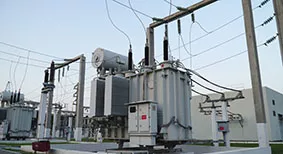
Confidence in safe working conditions also depends on the condition of the infrastructure itself. Critical electrical systems do not go straight from healthy to failed. They deteriorate over time as components age, operating conditions become more demanding, and hidden weaknesses emerge. When those changes go undetected, the result is not just a maintenance issue. It can become a safety issue.
Infrastructure safety management cannot be separated from asset understanding. Safe systems are not simply systems that are still running. They are systems whose condition is actively understood, assessed, and managed before deterioration becomes dangerous. In practice, that means safety is strengthened when organisations combine condition visibility, dependable asset performance, and better decision-making rather than treating them as separate concerns. If deterioration continues to go unseen, the people eventually exposed to the consequences may be engineers in the field, operators making decisions under pressure, or the wider public relying on the service the system supports.
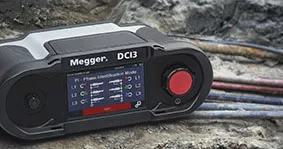
Testing, monitoring, and diagnostics make a practical difference here. When organisations move from reactive maintenance to predictive, condition-based approaches, faults are identified earlier and dealt with under more controlled conditions rather than during an emergency. That reduces exposure, improves planning, and gives people more time, better information, and safer conditions in which to act.

Safety Is Ultimately About People
The impacts of safety extend far beyond the working environment itself. Safe infrastructure protects the people working on it directly, but it also protects the families waiting for them to return home, the patients in hospitals, the passengers on trains, the workers in factories, the children in schools, and the older people relying on heating, lighting, and essential services without having to think twice about whether those systems will keep working.
When electrical systems fail, the effects do not stay neatly contained within a technical boundary. They move quickly into everyday life. Healthcare services come under pressure, transport is disrupted, communications are affected, and normal routines become uncertain. The real impact is always human, even when the original failure began as a technical one.

The scale of impact becomes clear when major failures occur. During the 2012 India blackout, around 620 million people lost power, and roughly 300 trains were stranded mid-journey. It is an extreme example, but it illustrates an important truth: infrastructure failure at scale is never only an engineering problem. It becomes a human problem immediately.
The Safest Systems Are the Ones Most People Never Notice
One reason safety can be difficult to talk about is that its success is often measured by the absence of incidents. When systems operate as they should, there is no disruption, no injury, and no headline drawing attention to the work behind it. From the outside, this can make safety look straightforward, when in reality it reflects a huge amount of expertise, discipline, and ongoing effort across the lifecycle of the infrastructure.
That is also why safety should never be treated as background work. In a more pressured and more complex energy landscape, it is one of the clearest indicators of whether an organisation truly understands its systems, its risks, and the consequences of getting things wrong. The organisations managing power systems safely are the ones investing in visibility, engineering discipline, workforce competence, and early intervention rather than waiting for failure to reveal weak points.

Safety Is Not Accidental
Safety is not accidental. It is engineered, tested, and maintained over time by people making informed decisions to protect others. This includes the engineers and technicians closest to risk, the teams supporting them, the families connected to them, and the wider lives that rely on safe and reliable infrastructure every day.
When this work is done well, most people will never notice it. Its invisibility does not make it less important. It makes it fundamental.
This is also why the One Megger approach matters. Safe infrastructure depends on more than isolated checks or individual products. It depends on a connected ecosystem of knowledge, visibility, testing, monitoring, and informed action across the full lifecycle of the system.
This is the safety we take for granted.