Hidden Winding Connection Defect Discovered in a 32 MVA Generator Step-Up Transformer After 23 Years in Service
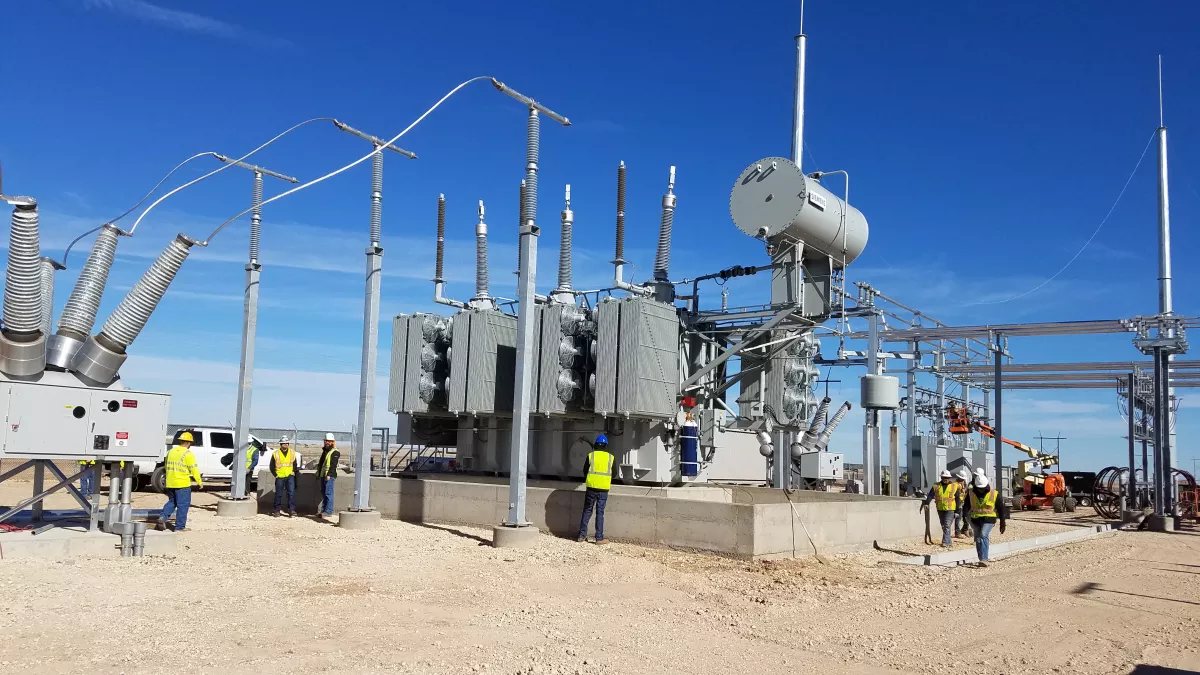
After more than two decades in service, a 32 MVA generator step-up transformer at a major North American utility triggered its Buchholz relay, indicating gas accumulation inside the transformer.
A dissolved gas analysis carried out two weeks later confirmed abnormal conditions within the transformer oil. Hydrogen levels had increased significantly, approaching 1000 ppm, while methane and carbon monoxide concentrations were also rising. The gas pattern indicated a fault mechanism involving both electrical discharge activity and localised overheating within the transformer.
Situations like this present a familiar challenge for engineers responsible for transformer condition assessment. Monitoring systems can provide clear evidence that something abnormal is developing inside a transformer, but they do not necessarily reveal the location or severity of the problem.
Before the unit can safely return to service, engineers must determine whether the fault is progressing and identify the part of the transformer involved.

To understand the source of the abnormal condition, the utility carried out a series of electrical diagnostic tests for power transformers.
Electrical diagnostic testing
Three electrical tests were performed during the investigation:
- turns ratio testing (TTR)
- winding resistance testing (WR)
- short-circuit impedance testing (SCI)
Each of these measurements evaluates a different aspect of transformer condition. When interpreted together, they provide insight into the electrical integrity of the windings, the condition of internal connections, and the mechanical structure of the transformer.
The tests were carried out using the TAU3 transformer test system, which allows engineers to perform multiple transformer diagnostic measurements from a single platform and compare results during the same investigation.
The turns ratio test results were within acceptable limits across all three phases, confirming that the electrical relationship between the windings remained correct.

The winding resistance measurements revealed a different condition.
On the high-voltage side, the resistance values were well balanced, showing only a 0.17 percent variation between phases. On the low-voltage side, however, the measurements showed a resistance imbalance of 5.39 percent between the X1 and X2 windings. Although IEEE guidance allows differences approaching five percent under certain circumstances, experienced engineers typically expect phase-to-phase resistance differences to remain closer to two per cent when measurements are taken at the same temperature.
The results indicated that the abnormal condition was likely associated with the low-voltage winding connections.

Short-circuit impedance testing supported this conclusion. The impedance measurements also produced abnormal results, reinforcing the indication that the transformer contained a mechanical or connection-related defect.
At this stage of the investigation, the monitoring data and electrical test results pointed toward a developing issue inside the transformer, but confirmation required internal inspection.

Internal inspection and root cause
To verify the source of the abnormal measurements, the transformer oil was drained and the active part of the transformer was inspected.
The cause of the problem became immediately apparent.
The crimped joint connecting the X1 winding to the X1 bushing had never been properly secured during manufacturing. The conductor connection could be separated by hand and showed clear evidence of overheating and oil degradation.
This loose connection increased resistance within the winding circuit. The resulting heating produced the gas signature detected during the dissolved gas analysis and created the phase imbalance observed in the winding resistance measurements.
The damaged conductor sections were removed and replacement components were arranged. Because the affected portion of the winding had been damaged by overheating, a longer conductor section was required during the repair.


Interpreting diagnostic results
This investigation highlights the importance of interpreting monitoring data and electrical transformer test results together when assessing transformer condition.
Dissolved gas analysis provided the first indication that abnormal conditions were developing inside the transformer. Electrical testing then helped narrow down the likely source of the problem by identifying a significant imbalance in the low-voltage winding resistance.
By correlating the results of several diagnostic measurements, engineers determined that the fault was due to a connection issue within the transformer winding rather than a broader insulation failure.
Lessons for transformer fault investigation
Several practical lessons emerge from this investigation.
Monitoring systems such as Buchholz relays and dissolved gas analysis provide valuable early warning of developing internal conditions. However, these systems typically indicate that a fault exists rather than identifying its precise location.
Electrical tests, such as winding resistance measurements, remain one of the most effective diagnostic tools for identifying connection problems or mechanical defects in transformer windings. Even relatively small resistance imbalances can indicate developing issues that may not yet be visible through other diagnostic methods.
Finally, performing several complementary tests during the same investigation allows engineers to interpret results in context. Modern transformer test systems, such as the TAU3, enable efficient turns-ratio, winding-resistance, and impedance measurements and direct comparison of results when investigating abnormal transformer behaviour.
In this case, the combination of monitoring data, electrical testing, and internal inspection ultimately revealed a manufacturing defect that had remained hidden inside the transformer for more than two decades.
Continue the investigation
This article outlines how monitoring data and electrical testing helped engineers identify a hidden winding connection defect in a generator step-up transformer.
For a deeper look at the investigation, including the full test results, inspection images, and repair details, download the complete case study. You can also explore the Megger TAU3 transformer test system used during the investigation to learn how it supports efficient transformer diagnostic testing in the field.


