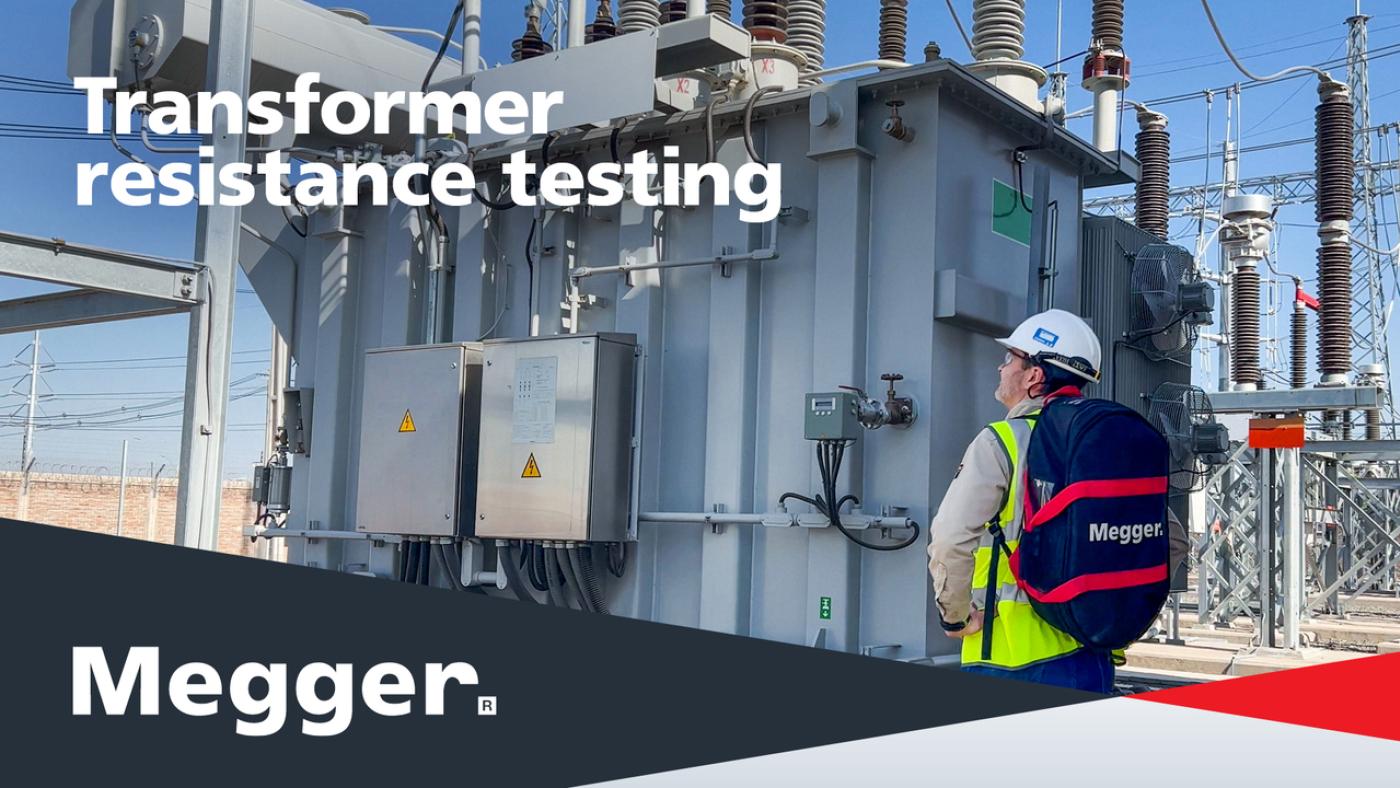
Transformer winding resistance testing

Megger transformer ohmmeters measure winding resistance with fast stabilisation, high test currents and automated OLTC diagnostics, giving you clear insight into transformer health.

Winding resistance testing reveals problems you cannot see from the outside: loose connections, deteriorating contacts, shorted turns and issues inside on-load tap changers (OLTCs). These faults increase heating, create imbalance and shorten transformer life.

Megger transformer ohmmeters deliver stable test currents up to 100 A, helping the core reach saturation quickly so measurements settle fast. With automated OLTC measurements and dynamic resistance recording, you can see transition issues and contact wear early—before they turn into failures.

Whether you’re commissioning a new transformer, checking for transport damage or carrying out routine maintenance, winding resistance testing gives you a clear picture of what’s happening inside the active part.

Frequently Asked Questions

Winding resistance tests should be performed: 

  • after delivery, to detect transport or handling damage 
  • during commissioning, to create baseline values 
  • during routine maintenance (one of the most important periodic tests) 
  • following faults, overloads or tap changer problems 
  • whenever unusual heating or imbalance is suspected 

Many transformer issues cause a change in DC winding resistance, making this an essential diagnostic tool. 

No. A ripple test measures how much current dips during a tap change and expresses it as a percentage. It gives a general indication of transition behaviour but not detailed timing or resistor values. 

DRM, on the other hand, records current and/or voltage continuously during the tap change. This reveals: 

  • contact timing 
  • transition resistor condition 
  • slow or sticking tap operations 
  • intermittent or noisy transitions 

DRM is a much richer diagnostic. 

To get stable readings, the test current should be: 

  • above 1% of rated current (to saturate the core and reduce inductance effects) 
  • below 15% of rated current (to avoid heating the winding) 

Most measurements fall comfortably between these limits. Too low a current leads to noisy, inconsistent values; too high a current risks temperature rise and inaccurate readings. 

Winding resistance is measured by injecting DC into a transformer winding and recording the stabilised voltage and current. Key steps include: 

  1. connect the test leads according to the diagram 
  1. energise the selected test current 
  1. allow the current to stabilise 
  1. record the resistance value 
  1. compare to nameplate, baseline or sister-unit values 
  1. (if OLTC-equipped) perform dynamic measurements during tap transitions 
  1. demagnetise the core after testing 

Correct setup, saturation and demagnetisation are essential for repeatable results. 

Find out more about our transformer resistance testing systems

Megger’s winding resistance and OLTC diagnostic tools help you assess transformer condition confidently—whether you’re commissioning, troubleshooting or performing routine maintenance. Our experts can help you choose the right instrument for your test strategy.

Additional Resources

Take a deeper dive into transformer resistance testing solutions through our comprehensive guides.

Q and A on winding resistance testing in power transformers

Power transformers are costly assets and they play a key role in every power distribution system.

Read More

Q and A: Winding resistance testing

Here are some of the questions the Megger helpline frequently receives about this invaluable test.

Read More

Still retesting? Why field workflows are due for a rethink

Winding resistance testing hasn’t changed much in the last decade — but the demands on crews have.

Read More