Transformer short-circuit impedance

Instruments for evaluating the physical condition of windings in high-voltage transformers. Measuring short-circuit impedance (leakage reactance) helps detect and diagnose winding deformation.

Transformer short-circuit impedance testing — also known as leakage reactance testing — evaluates the physical condition of transformer windings by measuring impedance and related parameters. It provides essential insight into potential winding deformation, movement, or distortion that may compromise transformer reliability. 

SCI also supports the validation of other diagnostic tests sensitive to mechanical changes, such as SFRA and capacitance measurements. Because winding deformation affects flux distribution, impedance, and loading behaviour (particularly for transformers operating in parallel), SCI plays a crucial role in ensuring safe, efficient operation.

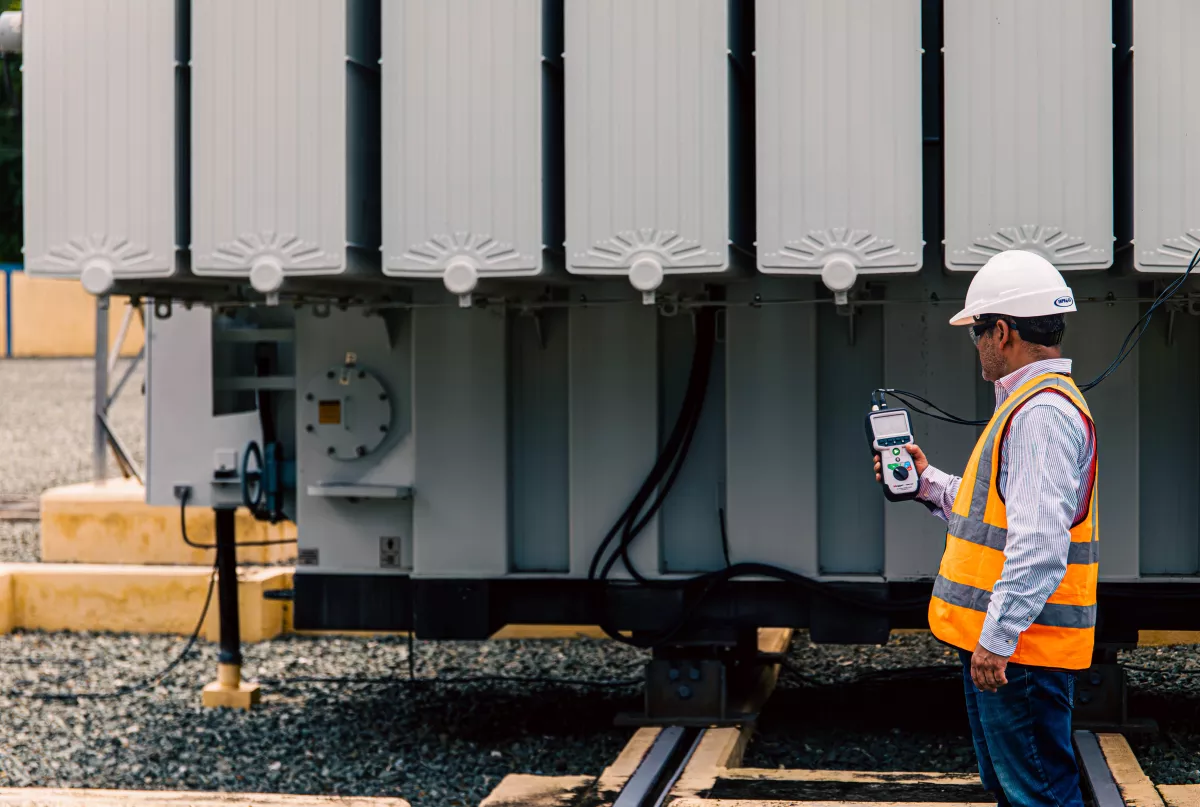
Megger operative conducting a short circuit test on a transformer in a substation environment

Frequently asked questions

Short-circuit impedance (leakage reactance) tests verify whether the windings and core have experienced physical movement. Traditionally, this required disconnecting leads used for TTR or winding resistance and manually applying a large cross-section shorting jumper — a process prone to connection issues. With Megger solutions such as the TAU3’s patent-pending internal shorting design, SCI can be performed using the same connections as turns-ratio and winding resistance tests. 

Two commonly used complementary methods are: 

  • Capacitance and dissipation factor 
  • Sweep Frequency Response Analysis (SFRA) — highly sensitive to mechanical movement and geometry changes. 

Several parameters can influence SCI values, including (from CIGRE-based interpretation): 

  • Winding geometry and spacing 
  • Core condition and magnetic circuit characteristics 
  • Mechanical deformation following through-faults 
  • Tap-changer position 
  • Temperature and loading conditions 
  • Connection configuration (e.g., short-circuiting arrangement) 

Reference: CIGRE guidance (interpretation based on Table 39 and related notes). 

Typical SCI values vary by transformer design, voltage class, core type, and power rating. CIGRE provides indicative ranges (Table 39), generally showing: 

  • Distribution transformers: lower Zₖ due to compact windings 
  • Power transformers: higher Zₖ, designed to manage fault levels and voltage regulation 
  • Autotransformers: values depend strongly on series/parallel winding relations 

These values help determine whether a transformer remains within acceptable mechanical condition limits. Reference: CIGRE guidelines, Table 39 (interpretation) 

Find out more about our transformer short-circuit impedance testing systems

Megger’s transformers short-circuit impedance equipment and solutions for transformers and HV assets guarantee accuracy, reliability, safety and smart investing. 

Additional Resources

Take a deeper dive into transformer short-circuit impedance solutions through our comprehensive guides.

The do’s and don’ts of insulation power factor testing – part 1

Power factor (PF) (or dissipation factor (DF)) and capacitance tests are widely used to assess the condition of the insulation in transformers and other electrical assets.

Read More

Find out about SFRA the practical way

Sweep frequency response analysis (SFRA) testing on transformers provides invaluable information about the mechanical integrity of the transformer’s components.

Read More

Still retesting? Why field workflows are due for a rethink

Winding resistance testing hasn’t changed much in the last decade — but the demands on crews have.

Read More