How Innovations in Grid Monitoring Are Driving Digitalisation in Utilities
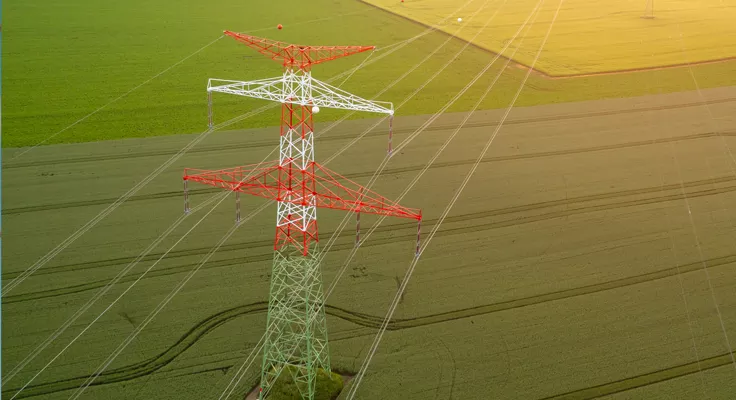
Utilities executives need to reduce outage durations while simultaneously managing increasingly complex grid infrastructure.
Traditional monitoring approaches leave critical blind spots, forcing reactive responses that drain resources and frustrate customers.
However, the shift toward advanced grid monitoring solutions offers a path from reactive firefighting to predictive intelligence.
Grid digitalisation fundamentally alters how utilities detect, analyse, and respond to network disturbances.
Modern monitoring systems integrate effortlessly with existing infrastructure while delivering real-time insights that transform operational decision-making.
What Role Does Real-Time Data Collection Play in Grid Digitalisation?
Advanced grid monitoring relies on continuous data collection from strategically positioned sensors throughout the distribution network. These systems capture electrical parameters with sub-second precision, creating comprehensive visibility into grid performance.
Modern sensors. such as the MS5000, utilise sophisticated algorithms to distinguish between normal operational variations and potentially hazardous conditions. High-resolution waveform sampling at rates up to 8.192ksps enables detection of transient events that traditional systems miss entirely. This granular data collection supports both immediate fault location and long-term asset health assessment.
IPv6 mesh networking protocols create self-healing communication networks that maintain connectivity across vast geographical areas. Sensors automatically establish secure communication pathways, ensuring data reaches control centres even when individual communication links fail.
How Do Predictive Analytics Transform Fault Management?
Machine learning algorithms process continuous data streams to identify patterns that precede equipment failures. These systems analyse voltage fluctuations, current harmonics, and thermal signatures to predict component degradation before catastrophic failure occurs.
Predictive fault detection reduces average interruption duration by enabling proactive maintenance during planned outage windows. Utilities can schedule repairs based on actual equipment condition rather than predetermined time intervals, optimising resource allocation and minimising customer impact.
High-impedance fault detection algorithms identify dangerous conditions that traditional protective systems often overlook. These faults, frequently caused by vegetation contact or conductor damage, pose significant fire risks and safety hazards. Advanced detection capabilities enable rapid response to these challenging fault types.
What Integration Challenges Must Utilities Address During Implementation?
Legacy SCADA systems require careful integration with modern monitoring platforms to ensure seamless data flow and operational continuity. Utilities must maintain existing operational procedures while gradually incorporating new capabilities.
Cybersecurity protocols demand end-to-end encryption for all data transmission, with multi-layered authentication systems protecting against unauthorised access. Modern grid monitoring systems implement TLS/SSL encryption, certificate enrollment, and private network connections to meet stringent security requirements.
Communication infrastructure must support diverse connectivity options, including cellular networks, fibre optic connections, and radio mesh networks. This redundancy ensures continuous monitoring capability regardless of communication system failures or geographical constraints.
How Does Advanced Grid Monitoring Support Renewable Energy Integration?
Distributed energy resources create bidirectional power flows that complicate traditional grid management approaches. Advanced monitoring systems track power flow direction and magnitude in real-time, enabling operators to optimise voltage regulation and reactive power management.
Renewable energy sources introduce harmonic distortions and voltage fluctuations that stress electrical assets. Continuous power quality monitoring identifies these impacts, supporting targeted mitigation strategies that protect equipment while maximising renewable energy utilisation.
Grid stability monitoring becomes critical as renewable penetration increases. Advanced systems track frequency variations, voltage transients, and phase angle relationships to maintain synchronisation across distributed generation sources.
What Operational Benefits Drive Grid Monitoring Implementation?
Fault location accuracy improves dramatically with distributed monitoring capabilities. Instead of patrolling entire circuit routes, maintenance crews receive precise location data that reduces response times and restoration costs.
Load balancing optimisation reduces peak demand charges and improves asset utilisation. Real-time power flow monitoring enables dynamic load transfers that prevent equipment overloading while maintaining service quality.
Vegetation management programs benefit from early detection of encroachment-related disturbances. Monitoring systems identify intermittent faults caused by vegetation contact, enabling targeted maintenance that reduces wildfire risk and improves system reliability.
Asset health assessment transitions from time-based to condition-based maintenance strategies. Continuous monitoring data reveals actual equipment performance trends, supporting data-driven replacement decisions that optimise capital expenditure timing.
What Implementation Strategies Ensure Successful Digital Transformation?
Phased deployment approaches minimise operational disruption while demonstrating incremental value. Utilities typically begin with high-priority circuits or problem areas before expanding coverage across the entire distribution network.
Cross-functional teams ensure monitoring capabilities align with operational needs across multiple departments. Engineering, operations, and maintenance teams must collaborate to define monitoring requirements and response procedures.
Training programs prepare personnel for new operational capabilities and responsibilities. Field crews require familiarity with enhanced fault location tools, while control room operators need training on advanced analytics interfaces.
Performance metrics establish baseline measurements and track improvement over time. Key indicators include fault location accuracy, response time reduction, and customer satisfaction scores.
How Do Grid Analytics Drive Strategic Decision-Making?
Data visualisation platforms transform complex electrical measurements into actionable insights that support executive decision-making. Interactive dashboards present grid performance trends, maintenance priorities, and investment opportunities in formats accessible to non-technical stakeholders.
Predictive maintenance scheduling optimises resource allocation by identifying equipment requiring attention based on actual condition rather than arbitrary time intervals. This approach reduces maintenance costs while improving equipment reliability and extending asset life.
Investment prioritisation benefits from comprehensive asset health data that identifies infrastructure requiring upgrade or replacement. Data-driven capital planning ensures limited resources target areas with greatest impact on system performance and customer satisfaction.
Transforming Grid Operations Through Intelligent Monitoring
Grid monitoring innovations represent more than technological upgrades; they fundamentally change how utilities understand and manage their infrastructure. The transition from reactive to predictive operations requires strategic vision and systematic implementation.
Success depends on integrating advanced monitoring capabilities with existing operational processes while building organisational capabilities to leverage new data sources. Utilities that embrace this transformation position themselves to meet evolving customer expectations while managing increasingly complex grid infrastructure.
To explore how advanced grid monitoring can transform your utility operations, take a look at our comprehensive grid analytics solutions that integrate seamlessly with existing infrastructure while delivering measurable operational improvements.


