How Can Better Fault Detection Reduce Transformer Maintenance Costs?
A sudden power transformer failure brings severe financial consequences. The direct costs of repairing a multi-million-pound asset, combined with lost revenue from unplanned outages, quickly drain operation and maintenance budgets.
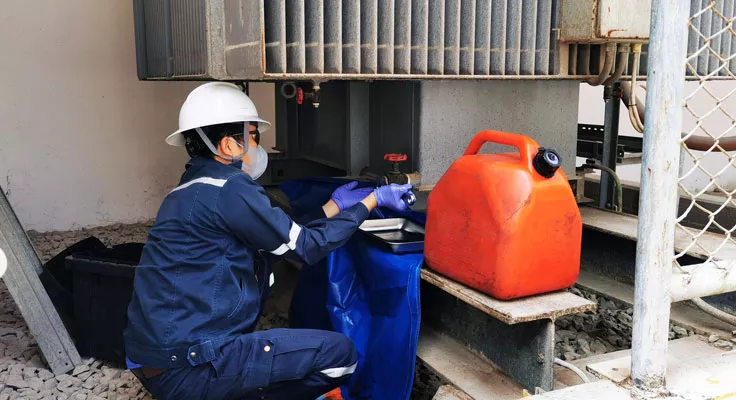
Proactive asset management prevents these catastrophic failures. By combining advanced online monitoring with routine offline laboratory testing, operators gain the insights needed to address issues before they escalate.
What Are the Most Common Transformer Fault Gases?
Transformers degrade under thermal and electrical stress, generating specific dissolved gases in the insulating oil. Two gases demand the most attention.
Hydrogen acts as an early warning for low-energy faults, such as partial discharge, which occur above 150 degrees Celsius.
Acetylene serves as a definitive indicator of high-energy arcing events exceeding 700 degrees Celsius.
Detecting these gases promptly allows engineers to schedule controlled maintenance activities instead of reacting to expensive emergencies.
Stop Transformer Failures Before They Drain Your Budget
A single unplanned failure can cost millions. The InsuLogix G2 continuously measures hydrogen, acetylene, and moisture to detect faults early, so you act before damage becomes irreversible.
Why Do I Need Online Monitoring and Offline Lab Testing?
Online monitoring does not replace offline laboratory testing. Offline dissolved gas analysis remains the benchmark for understanding an asset's condition and making final operational decisions. A laboratory performs comprehensive tests that provide a detailed chemical profile.
However, periodic sampling leaves extended periods where the transformer's condition remains unknown. Continuous online monitors bridge this gap. They track gas generation rates and trigger early warnings. Once an online monitor flags an issue, you validate the alarm by testing a physical oil sample in an accredited laboratory. This integrated strategy provides complete visibility into asset health.
How Does the InsuLogix G2 Improve Fault Detection?
The InsuLogix G2 is a highly sensitive fault detector that continuously measures hydrogen, acetylene, and moisture.
Many online monitors struggle to isolate acetylene accurately or measure multiple gases at a prohibitive cost.
The InsuLogix G2 uses tuneable diode laser spectroscopy to provide laboratory-grade acetylene detection down to 0.5 parts per million. This targeted approach delivers the performance of expensive diagnostic monitors at a fraction of the price.
Some internal components, like an on-load tap changer, naturally generate acetylene during normal operation. If oil leaks from this component into the main tank, a basic monitor might trigger a false alarm.
By measuring both hydrogen and acetylene, the InsuLogix G2 allows you to evaluate the ratio between the two gases.
This ratio helps you determine whether the acetylene came from a normal component leak or a genuine internal fault, preventing costly and unnecessary inspections.
How Does Proactive Maintenance Reduce Costs?
Replacing reactive repairs with condition-based maintenance delivers measurable financial benefits.
Online monitoring detects incipient faults early, allowing you to take corrective action before irreversible damage occurs.
This mitigates stress on the cellulose insulation and extends the operational life of the transformer. You maximise your return on investment and defer capital replacement costs.
Scheduled maintenance is far less expensive than emergency repairs, temporary power solutions, and environmental cleanup efforts.
How Do I Implement a Predictive Maintenance Strategy?
Transforming your maintenance approach requires a structured plan. Start by deploying the InsuLogix G2 on your most critical transformers.
Use the continuous data to establish clear alarm thresholds and track gas generation trends.
When the system detects a significant change, draw an oil sample for comprehensive offline laboratory analysis.
This powerful combination gives you the confidence to make informed, data-driven decisions.
Contact our team of experts today to discuss how to integrate advanced gas monitoring into your asset management programme.


