Online vs Offline DGA Monitoring: Which Is Right for You?
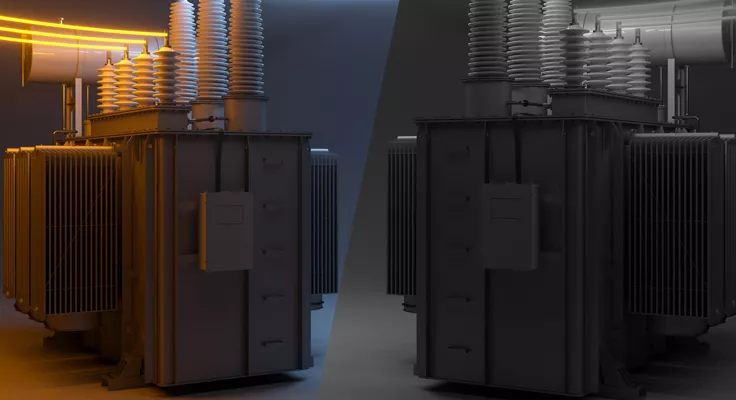
Power transformers are significant investments that utilities and industrial facilities cannot afford to lose to unexpected failures. With transformer replacement costs often exceeding millions of pounds and outage impacts rippling across entire networks, the question isn't whether to monitor dissolved gases; it's how to monitor them most effectively.
DGA monitoring comes in two distinct approaches: traditional offline sampling with laboratory analysis, and continuous online monitoring systems. Each method offers unique advantages and serves different operational requirements.
Understanding these differences enables asset managers to make informed decisions that align with their risk tolerance, budget constraints, and maintenance strategies.
How Does Offline DGA Monitoring Work?
Offline DGA monitoring relies on periodic oil sampling and laboratory analysis using gas chromatography. Trained technicians collect oil samples from transformers at scheduled intervals (typically quarterly, bi-annually, or annually) then transport these samples to laboratories for detailed analysis.
The laboratory process involves extracting dissolved gases from the oil sample and separating them using gas chromatography columns. This established technique can identify and quantify multiple fault gases including hydrogen, methane, ethane, ethylene, acetylene, carbon monoxide, and carbon dioxide.
Laboratory analysis provides comprehensive data with high accuracy and the ability to detect very low gas concentrations. The controlled environment ensures consistent measurement conditions and enables correlation with historical data spanning decades.
How Does Online DGA Monitoring Work?
Online DGA monitoring systems connect directly to transformer conservator tanks or oil circulation systems, providing continuous real-time measurements. These systems use either gas chromatography technology with automated calibration cycles or infrared spectroscopy combined with secondary sensors.
Modern online monitors can track key fault gases continuously, generating data points multiple times per day rather than at discrete sampling intervals. This constant surveillance enables immediate detection of developing faults and provides trend information that reveals the rate of gas generation.
Online systems integrate with SCADA networks and asset management platforms, delivering automated alerts when gas concentrations exceed predetermined thresholds. This connectivity transforms raw data into actionable intelligence for maintenance teams.
Which Gases Should You Monitor?
The selection of monitored gases depends on your monitoring approach and operational priorities. Laboratory analysis typically measures all key fault gases, whilst online monitors may focus on the most critical indicators.
For comprehensive fault detection, monitoring should include hydrogen (partial discharge detection), acetylene (arcing faults), ethylene and methane (thermal faults), carbon monoxide (cellulose degradation), and moisture content (insulation condition). Some applications benefit from monitoring carbon dioxide and ethane for additional diagnostic capability.
Critical transformers often warrant multi-gas online monitoring, whilst less critical assets may require only hydrogen and acetylene monitoring to detect the most severe fault conditions. The key is matching monitoring capability to asset criticality and risk tolerance.
What Are the Key Advantages of Each Approach?
Offline monitoring excels in providing comprehensive analysis with laboratory precision. The controlled environment eliminates measurement uncertainties associated with field conditions, whilst trained analysts can perform sophisticated interpretations using established diagnostic techniques like the Duval Triangle.
Laboratory analysis also enables measurement of additional oil parameters including moisture content, acidity, dielectric breakdown strength, and furanic compounds. This comprehensive assessment provides a complete picture of transformer health beyond dissolved gas concentrations.
Online monitoring delivers continuous surveillance with immediate fault detection capability. Real-time data enables rapid response to developing faults, whilst trend analysis reveals fault progression rates that periodic sampling might miss.
The automated nature of online monitoring eliminates sampling errors and provides consistent measurement intervals. Integration with control systems enables immediate alerts and automated responses to critical conditions.
How Do Costs Compare Between Methods?
Offline monitoring involves recurring laboratory fees, sampling labour costs, and potential delays in fault detection that could lead to expensive emergency repairs. Whilst individual sample costs appear modest, annual monitoring programmes for large transformer fleets generate substantial cumulative expenses.
Online monitoring requires higher initial capital investment but eliminates ongoing laboratory fees and reduces labour requirements. The continuous monitoring capability often prevents costly failures that offset the initial investment through avoided outages and extended asset life.
For critical transformers where unplanned outages cost hundreds of thousands of pounds per hour, online monitoring typically provides superior return on investment. Less critical assets may justify offline monitoring if the risk of delayed fault detection remains acceptable.
Which Method Provides Better Fault Detection?
Both methods can detect transformer faults effectively, but their detection capabilities differ significantly in timing and resolution. Offline monitoring might detect faults during scheduled sampling intervals, potentially missing rapid fault development between samples.
Online monitoring excels at detecting fast-developing faults and provides trend information that reveals fault severity. Continuous data collection enables detection of transient events that periodic sampling could miss entirely.
However, laboratory analysis offers superior diagnostic capability through comprehensive gas analysis and correlation with additional oil parameters. The combination of multiple diagnostic indicators often provides more definitive fault identification than gas concentrations alone.
Can You Use Both Methods Together?
Many utilities and industrial facilities employ hybrid approaches that combine online monitoring with periodic laboratory analysis. Online systems provide continuous surveillance and immediate fault detection, whilst laboratory analysis offers comprehensive diagnostic capability and verification of online measurements.
This integrated approach maximises fault detection capability whilst providing the diagnostic depth necessary for informed decision-making. Online monitors can extend the intervals between laboratory samples for healthy transformers whilst triggering additional sampling when fault conditions develop.
The hybrid approach also provides redundancy in critical applications where monitoring system failures could compromise asset protection. Laboratory analysis can verify online measurements and provide backup diagnostic capability.
Find the Right DGA Solution for Your Assets
Whether you're considering offline analysis, online systems, or a hybrid approach, Megger’s expert solutions help you match monitoring to your needs, risk profile, and budget.
Request a DGA quote today and take the first step toward smarter transformer health management.


