Motor Imbalance Diagnosis: Q&A Article
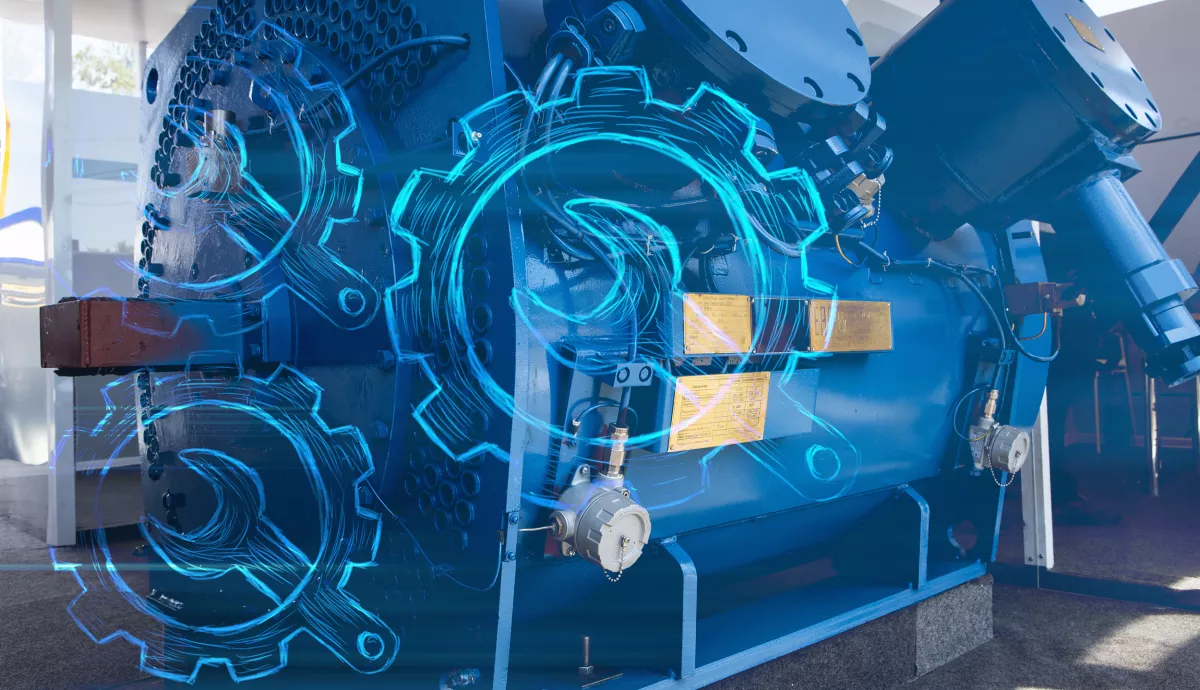
Motor imbalance remains one of the most critical challenges in rotating machinery maintenance.
As systems become more complex and downtime costs soar, precision diagnosis has never been more vital.
Got a burning question on diagnosing motor imbalances? Keep reading!
Q1: What are the fundamental mathematical principles behind modern motor imbalance analysis?
Expert Response: Motor imbalance analysis relies on understanding the relationship between unbalanced forces and resulting vibrations. The fundamental equation is F = mω²r, where F is the centrifugal force, m is the unbalanced mass, ω is the angular velocity, and r is the radius from the centre of rotation.
Modern analysis extends this through complex vector mathematics. We use the polar coordinate system where imbalance is expressed as both magnitude and phase angle. The phase relationship is crucial – it tells us not just how much imbalance exists, but precisely where it's located on the rotor.
Dynamic balancing requires solving simultaneous equations for multiple correction planes. For a two-plane balance, we solve:
- A₁₁W₁ + A₁₂W₂ = U₁
- A₂₁W₁ + A₂₂W₂ = U₂
Where A represents influence coefficients, W represents correction weights, and U represents measured unbalance vectors.
Q2: How do advanced signal processing algorithms enhance imbalance detection accuracy?
Expert Response: Digital signal processing has revolutionised imbalance diagnosis through sophisticated filtering and analysis techniques. Fast Fourier Transform (FFT) remains the cornerstone, but we now employ advanced methods like:
Envelope analysis strips away structural resonances to reveal bearing frequencies masked by imbalance. The algorithm uses Hilbert transforms to extract amplitude modulation characteristics.
Order tracking maintains synchronisation with shaft speed during run-up or coast-down conditions. This technique uses tachometer signals to resample vibration data at constant angular increments rather than time intervals.
Cepstrum analysis identifies harmonics and sidebands that indicate coupling misalignment combined with imbalance. The quefrency domain reveals patterns invisible in standard frequency analysis.
Wavelet transforms provide time-frequency localisation, essential for diagnosing transient imbalance conditions or machinery with varying operational speeds.
These algorithms work synergistically. For instance, we might use order tracking during startup, apply envelope analysis to isolate imbalance signatures, then employ cepstrum analysis to differentiate between pure imbalance and combined fault conditions.
Q3: What are the latest non-contact diagnostic techniques for motor imbalance assessment?
Expert Response: Non-contact methods have advanced significantly, offering several advantages over traditional accelerometer-based approaches:
Laser Doppler vibrometry measures surface velocity with exceptional precision. Current systems achieve measurement ranges from nanometres to millimetres with frequency response up to 20 MHz. The technique excels in high-temperature environments or locations where sensor mounting is impossible.
Thermal imaging analysis detects imbalance through temperature distribution patterns. Unbalanced rotors create characteristic thermal signatures due to increased bearing loads and air turbulence. Modern thermal cameras with 0.02°C resolution can identify subtle temperature variations indicating developing imbalance.
Motor current signature analysis (MCSA) examines supply current characteristics. Imbalance creates distinctive sidebands around supply frequency at (1±2s)f, where s is slip and f is supply frequency. This technique requires no additional sensors and works continuously during operation.
Stray flux monitoring uses magnetic field sensors to detect rotor asymmetries. Hall effect sensors positioned around the motor housing measure magnetic flux variations caused by air gap changes from shaft displacement due to imbalance.
Q4: How do you differentiate between static, couple, and dynamic imbalance using diagnostic data?
Expert Response: Distinguishing imbalance types requires understanding their unique signature characteristics in multi-point measurements:
Static imbalance appears as identical amplitude and phase readings at both bearing locations when measuring radially. The rotor displaces as a rigid body without tilting. Frequency content shows pure 1X running speed with minimal harmonics.
Couple imbalance manifests as 180° phase differences between bearing measurements, with amplitudes potentially varying based on bearing span and measurement locations. The rotor tilts but doesn't translate. Axial measurements often reveal significant 1X components.
Dynamic imbalance combines both conditions, showing neither identical phase relationships nor perfect opposition. Vector analysis reveals two distinct imbalance components that must be corrected in separate planes.
Diagnostic approach:
- Measure vibration at both bearings simultaneously
- Calculate phase differences and amplitude ratios
- Perform vector analysis to decompose readings
- Use influence coefficient methods to verify findings
Critical parameters:
- Phase difference <30°: Predominantly static
- Phase difference 150-210°: Predominantly couple
- Phase difference 30-150° or 210-330°: Dynamic (mixed condition)
Q5: What role do influence coefficients play in advanced balancing procedures?
Expert Response: Influence coefficients form the mathematical foundation of precision balancing, representing the system's response to known test masses. They're essentially transfer functions between correction weights and resulting vibration changes.
Measurement procedure:
- Record baseline vibration (amplitude and phase)
- Add known test weight at specific angular position
- Record new vibration readings
- Calculate influence coefficient: IC = (V₂ - V₁)/Test Weight
For multi-plane balancing:
Each correction plane influences multiple measurement points. We build influence coefficient matrices describing these relationships. The matrix equation becomes:
[ΔV] = [IC] × [ΔW]
Where ΔV represents vibration changes, IC is the influence coefficient matrix, and ΔW represents weight changes.
Key considerations:
- Temperature affects coefficients by 2-5% per 10°C change
- Speed dependency requires separate coefficient sets for different operating ranges
- Bearing stiffness variations alter coefficients over time
- Cross-coupling between planes increases with rotor flexibility
Quality indicators:
- Coefficient repeatability within ±10%
- Phase angle consistency within ±5°
- Amplitude linearity across test weight range
Modern software automatically validates coefficient quality and flags suspect data before calculating correction weights.
Q6: How do you address motor imbalance in variable frequency drive (VFD) applications?
Expert Response: VFD applications present unique challenges due to speed variation, electromagnetic interference, and harmonics affecting diagnostic accuracy.
Electromagnetic interference mitigation:
- Use differential measurement techniques to reject common-mode noise
- Implement low-pass filtering below 10X running frequency
- Employ optical isolation between measurement equipment and VFD systems
- Position sensors away from VFD cabinets and power cables
Speed-dependent analysis:
Traditional fixed-frequency analysis becomes inadequate. We employ:
- Order normalisation: Convert time-based data to angular domain
- Campbell diagrams: Map vibration orders across speed ranges
- Operational deflection shapes: Visualise mode shapes during speed changes
Harmonic interference management:
VFD switching frequencies create harmonics that can mask imbalance signatures. Solutions include:
- Synchronous averaging: Reduces non-synchronous noise while preserving imbalance signals
- Notch filtering: Removes specific VFD-related frequencies
- Time synchronous averaging: Uses tachometer signals for precise data alignment
Practical considerations:
- Perform balancing at multiple speeds to verify consistency
- Account for magnetic forces varying with motor loading
- Consider regenerative braking effects on rotor dynamics
- Validate results during steady-state operation periods
Q7: What are the implications of motor imbalance on overall system reliability and how do you quantify them?
Expert Response: Motor imbalance creates cascading effects throughout mechanical systems, significantly impacting reliability through multiple failure mechanisms.
Primary failure modes:
- Bearing fatigue: Unbalanced loads reduce bearing life exponentially. The relationship follows: L₁₀ ∝ (P₀/P)³, where P₀ is basic dynamic load rating and P is applied load
- Coupling wear: Misalignment forces from imbalance accelerate coupling deterioration
- Foundation damage: Dynamic forces can cause concrete degradation and bolt loosening
- Secondary equipment failure: Pumps, fans, and driven equipment experience premature failure
Quantification methods:
Reliability impact assessment:
Use Weibull analysis to model failure rate increases:
- Baseline β (shape parameter): 2.0-2.5 for normal operation
- Imbalanced systems: β reduces to 1.5-1.8
- Mean time to failure decreases by 40-60%
Economic impact calculation:
Total cost = Direct costs + Indirect costs + Consequential costs
Where:
- Direct costs: Repair parts, labour, energy losses
- Indirect costs: Production losses, schedule disruptions
- Consequential costs: Secondary equipment damage, safety incidents
Vibration severity standards:
- Grade A (excellent): <1.12 mm/s RMS
- Grade B (good): 1.12-2.8 mm/s RMS
- Grade C (fair): 2.8-7.1 mm/s RMS
- Grade D (poor): >7.1 mm/s RMS
Predictive modelling:
Implement Paris crack growth law for bearing race damage:
da/dN = C(ΔK)ᵐ
Where crack growth rate relates to stress intensity factor range, allowing prediction of remaining useful life based on current imbalance levels.
Q8: How do you validate balancing effectiveness and ensure long-term stability?
Expert Response: Validation requires comprehensive post-balance verification using multiple measurement techniques and acceptance criteria.
Immediate verification:
- Residual unbalance measurement: Should achieve <10% of original levels
- Phase verification: Correction vectors should align within ±15° of predicted values
- Harmonic content analysis: Higher harmonics should remain unchanged, confirming pure imbalance correction
- Cross-channel correlation: Verify consistent reduction across all measurement points
Long-term monitoring protocols:
- Trending analysis: Establish baseline signatures for comparison
- Statistical process control: Use control charts to detect gradual deterioration
- Operational deflection shape monitoring: Track changes in modal characteristics
- Temperature correlation: Monitor bearing temperatures for signs of developing issues
Quality assurance metrics:
- Balance quality grade: Per ISO 21940 standards
- Vibration reduction ratio: Minimum 75% reduction in 1X amplitude
- Phase consistency: <±10° variation across measurement locations
- Repeatability verification: Multiple measurement sets within ±5% agreement
Documentation requirements:
- Before/after polar plots showing vector changes
- Frequency spectra demonstrating selective 1X reduction
- Influence coefficient validation data
- Correction weight calculations and placement verification
- Performance trend data for reliability assessment
Automated validation systems now employ machine learning algorithms to:
- Predict optimal correction weights based on historical data
- Identify anomalous readings requiring manual review
- Generate confidence intervals for balance quality assessments
- Recommend maintenance intervals based on degradation rates
This systematic approach ensures not only immediate balancing success but also provides the foundation for predictive maintenance programmes and long-term asset reliability optimisation.


