How Do You Detect Motor Imbalances in Heavy Industrial Operations?
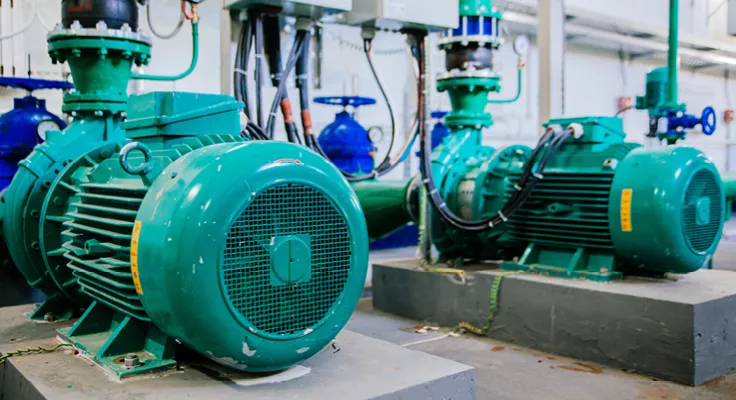
Motor imbalances in heavy industrial operations are one of the most significant threats to operational continuity and asset reliability.
These imbalances manifest through various mechanisms including rotor eccentricity, bearing degradation, and stator winding asymmetries, each capable of triggering catastrophic failures that halt production and generate substantial financial losses.
Understanding the detection methodologies for these imbalances requires a comprehensive grasp of electromechanical fault signatures and how they show up within complex industrial systems.
Modern diagnostic approaches leverage multiple testing methods to identify incipient faults before they progress to failure states.
What Causes Motor Imbalances in Industrial Systems?
Motor imbalances originate from several distinct failure mechanisms, each presenting unique diagnostic challenges. Static eccentricity occurs when the rotor centre remains fixed but positioned off the stator bore centre, typically resulting from manufacturing tolerances or bearing housing distortion. Dynamic eccentricity involves rotor whirling, where the rotor centre orbits around the stator bore centre during operation.
Thermal cycling in heavy industrial environments exacerbates these conditions by inducing differential expansion rates between rotor and stator components. Additionally, electromagnetic forces from supply voltage unbalance create asymmetric magnetic pulls that accelerate bearing wear patterns and promote progressive misalignment.
Stator winding imbalances arise from turn-to-turn faults, phase-to-phase leakage, or ground wall deterioration. These conditions create asymmetric magnetic fields that induce additional harmonic content in both current and vibration signatures, complicating traditional diagnostic approaches.
How Do Static Motor Analysis Techniques Detect Imbalances?
Static motor analysis provides the foundation for comprehensive imbalance detection by evaluating electrical parameters while the motor remains de-energised. Insulation resistance testing quantifies the integrity of winding-to-ground and phase-to-phase insulation systems, revealing early indicators of contamination or thermal degradation that contribute to imbalance conditions.
Polarisation index measurements extend this analysis by comparing insulation resistance values at different time intervals, typically one and ten minutes. Values below 2.0 indicate compromised insulation systems that may create asymmetric leakage paths and subsequent electromagnetic imbalances.
Surge testing applies controlled voltage impulses to motor windings, revealing turn-to-turn insulation weaknesses and winding geometry variations. The resulting oscilloscope traces display characteristic differences between phases when imbalances exist, enabling precise localisation of fault conditions before they manifest as operational problems.
Advanced static analysis incorporates partial discharge detection capabilities, identifying corona activity within insulation systems. These measurements provide quantitative assessment of insulation degradation patterns that directly correlate with developing imbalance conditions.
Which Dynamic Analysis Methods Reveal Operating Imbalances?
Dynamic motor analysis captures real-time operational parameters while motors operate under actual load conditions. Motor current signature analysis (MCSA) demodulates supply current waveforms to extract fault-related frequency components that indicate specific imbalance mechanisms.
Rotor bar defects manifest as sidebands around the supply frequency at (1±2s)f, where s represents slip and f denotes supply frequency. These signatures become particularly pronounced under high-load conditions when electromagnetic forces reach maximum intensity.
Bearing fault detection utilises characteristic defect frequencies calculated from bearing geometry and rotational speed. Inner race defects generate frequencies at BPFI × shaft speed, while outer race faults appear at BPFO × shaft speed. These frequencies modulate both current and vibration spectra, creating diagnostic signatures unique to specific bearing conditions.
Eccentricity detection requires analysis of both static and dynamic components within current spectra. Mixed eccentricity conditions produce complex sideband patterns that require sophisticated demodulation techniques to separate individual fault contributions accurately.
How Does Power Quality Analysis Support Imbalance Detection?
Power quality analysis examines supply-side conditions that contribute to motor imbalance development. Voltage unbalance exceeding 1% creates negative sequence currents that produce counter-rotating magnetic fields, inducing additional torque pulsations and accelerating rotor and bearing degradation.
Harmonic analysis identifies non-sinusoidal supply conditions that create additional heating and electromagnetic forces within motor structures. Fifth and seventh harmonics prove particularly problematic, creating torque pulsations at six times supply frequency that excite mechanical resonances and promote bearing failure.
Transient analysis captures voltage sags, swells, and interruptions that subject motor windings to thermal and mechanical stresses. These events often trigger latent insulation weaknesses that subsequently develop into imbalance conditions during normal operation.
What Role Does Predictive Maintenance Play in Early Detection?
Predictive maintenance programmes integrate multiple diagnostic technologies to establish baseline performance parameters and track degradation trends. This approach enables detection of developing imbalances months before they reach failure thresholds.
Trending analysis compares current measurements against historical databases, identifying subtle changes in fault-related frequencies that indicate progressive deterioration. Statistical process control methods establish alarm thresholds based on standard deviation limits, providing objective criteria for maintenance intervention.
Online monitoring systems provide continuous surveillance of critical motors, enabling immediate response to rapidly developing fault conditions. These systems integrate current signature analysis with vibration monitoring and thermal imaging to provide comprehensive asset health assessment.
How Can You Implement Effective Motor Testing Programmes?
Implementing comprehensive motor testing requires systematic integration of static and dynamic analysis techniques within existing maintenance workflows. Start by establishing baseline measurements for all critical motors using static analysis methods to document initial insulation condition and winding balance.
Develop testing frequencies based on motor criticality and operating environment. Critical path motors require monthly dynamic analysis, while less critical units may be tested quarterly. Emergency spare motors require annual static testing to ensure readiness for service.
Training programmes must emphasise proper interpretation of test results and correlation between different diagnostic techniques. Understanding the relationship between insulation degradation patterns and developing mechanical imbalances enables more accurate prognosis and maintenance planning.
Maximise Your Motor Reliability with Advanced Testing Solutions
Detecting motor imbalances in heavy industrial operations demands sophisticated diagnostic capabilities that extend beyond traditional maintenance approaches. The integration of static analysis, dynamic monitoring, and power quality assessment provides comprehensive insight into developing fault conditions before they threaten operational continuity.
Modern testing technologies enable precise characterisation of fault mechanisms while motors remain in service, supporting data-driven maintenance decisions that optimise both reliability and cost-effectiveness. The key lies in implementing systematic testing programmes that leverage multiple diagnostic techniques to provide complete visibility into motor health status.
Ready to transform your motor maintenance programme? Explore Megger's comprehensive range of motor and generator testing products designed specifically for heavy industrial applications. From advanced static analysers to dynamic monitoring systems, our solutions provide the diagnostic precision needed to detect imbalances before they impact your operations.


