How Terrain Challenges Are Being Overcome with Real-Time Fault Detection
Africa's electrical infrastructure faces extraordinary challenges that traditional grid management cannot solve. From Kenya's rugged terrain to South Africa's ageing systems, utilities across the continent are discovering that real-time fault detection technology transforms how they maintain grid reliability and serve customers.
The scale of Africa's grid challenges demands innovative solutions. With over 600 million people still lacking electricity access and existing infrastructure struggling with reliability, utilities need technology that can pinpoint faults instantly rather than spending days searching for problems manually.
Amotech’s recent implementation of advanced fault detection sensors demonstrates how real-time monitoring technology addresses these fundamental challenges.
The Reality of Grid Management in Challenging Terrain
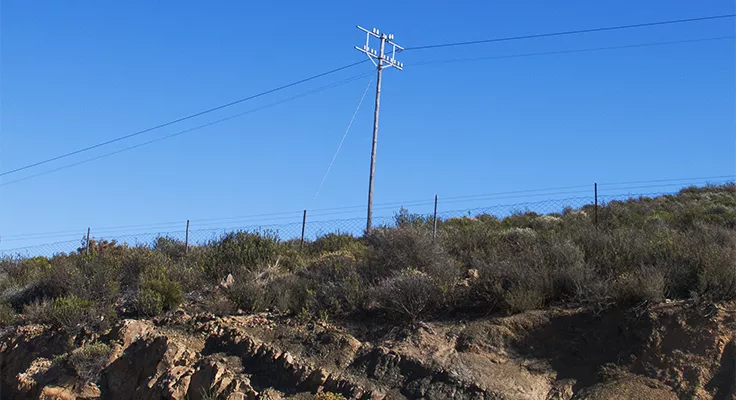
Africa's electrical grids operate under conditions that would challenge any utility worldwide. Kenya's distribution network exemplifies these challenges, spanning diverse terrain from coastal regions to dense forests and arid deserts.
The 11kV and 33kV lines that form the backbone of the distribution system must traverse valleys, climb mountains, and navigate through areas where traditional maintenance approaches prove inadequate.
When faults occur in these remote locations, traditional detection methods require manual sectionalisation, a process that involves systematically isolating different sections of the network to identify problem areas.
This approach often relies on educated guesswork, with maintenance teams spending days travelling to remote locations whilst customers experience extended outages.
The geographical barriers compound these challenges. Maintenance crews must navigate difficult terrain to reach fault locations, often requiring specialised equipment and extended travel times.
In some regions, weather conditions can further delay response times, leaving entire communities without power for extended periods.
Hidden faults present another significant challenge. These issues may not immediately cause complete outages but can compromise system reliability and efficiency. Without real-time grid monitoring, utilities cannot identify these problems until they escalate into major failures, disrupting service for large numbers of customers.
How Technology Is Used for Real-Time Fault Detection
Real-time fault detection technology transforms grid management by providing instant visibility into network conditions. Advanced sensors continuously monitor electrical parameters, identifying anomalies as they occur rather than after they cause outages.
The MS5000 system deployed across Kenya's network exemplifies this technology's capabilities. These sensors analyse waveform signatures in real-time, detecting high impedance faults that traditional protection systems often miss.
By monitoring voltage levels, current flow, and other electrical parameters continuously, the system identifies potential issues before they escalate into major failures.
This comprehensive monitoring approach provides utilities with 24/7 visibility into network conditions. Instead of reactive maintenance triggered by customer complaints, operators can identify problems proactively and dispatch maintenance teams with precise location information.
This targeted approach reduces response times from days to hours whilst improving the accuracy of fault location.
The technology also enables predictive maintenance strategies. By analysing data patterns over time, utilities can identify trends that indicate potential equipment failures. This forward-looking approach allows maintenance teams to address issues during planned maintenance windows rather than during emergency situations.
Transforming Reliability Through Data-Driven Operations
Real-time fault detection fundamentally changes how utilities measure and improve reliability. Traditional metrics like System Average Interruption Duration Index (SAIDI) and System Average Interruption Frequency Index (SAIFI) become achievable targets rather than aspirational goals.
Amotech & Kenya Power’s implementation shows his transformation in practice. The utility aims to reduce SAIDI from 100 hours to 50 hours, which is a 50% improvement in outage duration that directly impacts customer satisfaction. This improvement stems from the ability to locate faults quickly and accurately, reducing the time customers spend without power.
The data generated by real-time monitoring systems provides insights that extend beyond immediate fault detection. Utilities can analyse network performance patterns, identify recurring issues, and optimise maintenance schedules based on actual equipment performance rather than theoretical maintenance intervals.
This data-driven approach also supports better resource allocation. Maintenance teams can prioritise their efforts based on actual network conditions rather than responding to customer complaints. This targeted approach improves efficiency whilst ensuring critical infrastructure receives appropriate attention.
What Made Implementation So Successful?
The collaboration between Kenya Power, Megger, and Amotech Africa demonstrates how real-time fault detection technology can be successfully implemented across challenging terrain. The project's success stems from comprehensive planning, thorough training, and ongoing support that ensures local teams can operate the system effectively.
The installation process required careful coordination to minimise disruption to existing operations. Teams worked across regions from coastal areas to Western Kenya, installing sensors whilst maintaining normal service levels. This phased approach ensured that customers experienced minimal interruption during the upgrade process.
Training played a crucial role in the project's success. Local technical teams received comprehensive instruction on interpreting sensor data, understanding system alerts, and taking appropriate preventive actions. This knowledge transfer ensures that utilities can operate the system independently whilst maintaining high performance standards.
The results speak to the technology's effectiveness. Fault detection times have decreased significantly, enabling faster restoration of service when outages occur. More importantly, the predictive capabilities allow utilities to address potential issues before they cause customer interruptions.
The Future of Grid Management in Africa
Real-time fault detection technology is transforming how African utilities manage their networks, providing the visibility and control needed to deliver reliable electricity service under challenging conditions. The success of implementations like Kenya Power's makes it evident that these solutions can overcome geographical barriers, improve reliability metrics, and support broader economic development goals.
As more utilities adopt real-time monitoring technology, the collective impact on grid reliability will support Africa's continued development whilst positioning the continent at the forefront of smart grid innovation. The data infrastructure and operational capabilities developed through these projects provide the foundation for more comprehensive grid modernisation efforts.
The collaboration between utilities, technology providers, and local partners creates a sustainable model for technology implementation that builds local capabilities whilst delivering immediate operational benefits. This approach ensures that African utilities can operate these systems independently whilst maintaining high performance standards.
Watch the videos showcasing Megger and Amotech's collaboration in action to see how real-time fault detection technology is revolutionising grid management across Africa.


