Why Hydrogen and Acetylene Monitoring Prevent Asset Failure
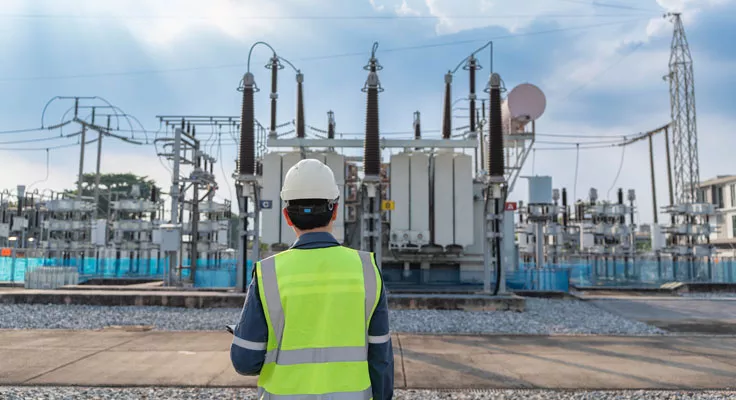
A massive power transformer quietly hums in a substation. It seems perfectly healthy on the outside, but a tiny electrical discharge begins to heat the insulating oil deep within the steel tank. Months pass before the next scheduled manual oil sample.
By the time the laboratory results arrive, that minor thermal stress has evolved into a catastrophic arcing fault. The transformer fails, taking a portion of the grid down with it.
You can prevent this scenario by monitoring the gases dissolved in the transformer oil.
Focusing specifically on hydrogen and acetylene gives you a precise, cost-effective, and reliable way to track asset health.
What Causes Fault Gases to Form in Transformer Oil?
Transformer insulating oil acts as both a coolant and a dielectric insulator. As it circulates, it touches every active component inside the tank. When the transformer experiences thermal or electrical stress, the hydrocarbon chains in the oil break down into low molecular weight gases.
The type and quantity of these gases directly correlate to the nature and severity of the internal fault. Measuring the concentration of these dissolved gases gives engineers a direct view of the internal condition without needing an invasive inspection. Because different faults produce different gas signatures, identifying the specific gases present tells your maintenance team exactly what type of stress the transformer is enduring.
Catch Transformer Faults Before They Become Failures
Continuous monitoring of hydrogen and acetylene gives you the earliest warning of developing faults, so you can act before minor stress turns into a costly outage. See how the InsuLogix G2 delivers real-time insight to protect your most critical assets.
Why Is Hydrogen Such an Important Early Warning Sign?
Hydrogen serves as the earliest indicator for the majority of developing fault conditions. It’s the primary gas generated during low-energy and low-temperature events. For example, partial discharge and early thermal stress starting around 150 degrees Celsius will produce hydrogen.
Because hydrogen appears in almost all transformer faults, monitoring it provides a highly sensitive early warning system. It tells your maintenance team that a problem is just beginning. By catching this early signal, you can intervene before minor wear and tear escalates into permanent damage.
What Does the Presence of Acetylene Mean for My Transformer?
Acetylene is universally recognised as the most critical indicator of severe transformer distress. Unlike other dissolved gases, acetylene forms exclusively during high-energy electrical faults. It requires intense thermal events where localised temperatures exceed 700 degrees Celsius.
These extreme conditions occur during severe arcing, which breaks the carbon-carbon bonds within the hydrocarbon oil. You won't find significant acetylene levels arising from normal transformer ageing or minor faults. Its presence is a near-definitive sign of an active and potentially catastrophic fault.
In practical terms, detecting even 1 part per million of acetylene in a large transformer justifies immediate investigation. The implications are profound, as rapid detection can prevent substantial equipment damage, collateral failures, and widespread grid reliability issues.
A separate case arises when the transformer is equipped with an On-Load Tap Changer (OLTC) and oil may leak from the OLTC into the main tank. In such situations, the ratio between acetylene and hydrogen can help indicate whether a fault is present in the transformer tank or whether the detected acetylene originates from the OLTC.
What Is the Most Cost-Effective Strategy to Integrate Online Monitoring with Laboratory Testing?
Traditional offline laboratory testing provides a comprehensive chemical profile of insulating oil and remains the benchmark for accurate diagnosis. However, sampling intervals can be long, ranging from months to years, creating gaps where faults may develop or escalate undetected.
Online monitoring bridges this gap by providing continuous visibility between laboratory tests.
A practical and cost-effective approach is to monitor hydrogen and acetylene online as the most critical gases. This enables early fault detection (via hydrogen) and a clear indication of fault criticality (via acetylene, correlated with hydrogen). Focusing on gases that indicate the highest-risk faults to the asset ensures effective monitoring.
When integrated with routine and alarm confirmation testing in the laboratory, this approach allows operators to expand real-time monitoring across a larger number of transformers, reducing both asset-level and fleet-level risk while supporting the transition toward a Smart Grid.
What Are the Financial and Safety Benefits of Online Monitoring?
Catastrophic transformer failures carry severe financial consequences. The direct costs include replacing a very expensive asset, cleaning up environmental spills, and coordinating temporary power solutions. The indirect costs, such as lost revenue and regulatory penalties, can be even more substantial.
Continuous online monitoring provides the most effective defence against these events. By delivering an early warning of developing faults, it enables investigation and maintenance to be scheduled on a planned basis. This transforms disruptive emergency work into controlled, efficient activities.
It also keeps your maintenance personnel safe by having a window into asset’s condition before proceeding with the oil sampling procedure. Furthermore, preventing catastrophic failures aligns directly with modern environmental and corporate governance objectives by avoiding oil spills and extending asset life.
How Can the InsuLogix G2 Improve My Predictive Maintenance Strategy?
To capture critical fault insights, operators need technology they can trust. The InsuLogix G2 is a high-performance online monitor designed specifically to detect hydrogen, acetylene, and moisture in transformer oil. It provides a scalable strategy for fleet-wide deployment, allowing you to control operational expenses while reducing risk.
The monitor uses Tunable Diode Laser Spectroscopy for its acetylene measurement. This advanced method passes a precisely tuned laser beam through the extracted gas sample. The laser interacts only with acetylene and moisture molecules, eliminating cross-interference from other gases. This technology provides the industry's most sensitive and reliable acetylene measurement available in a Fault Detection monitor, with a low detection limit of just 0.5 parts per million.
For hydrogen, the monitor relies on thermal conductivity technology. It features a low detection limit of 25 parts per million and extends up to 5,000 parts per million. The system operates with outstanding accuracy to ensure you receive precise data without false alarms.
Not only this, but the monitor also integrates seamlessly into your Supervisory Control and Data Acquisition system or Computerised Maintenance Management System. It features configurable solid-state relays that trigger immediate alarms when gas concentrations cross predefined thresholds.
Taking Proactive Steps to Protect Your Critical Assets
The transition from broad offline testing to continuous online monitoring represents a crucial evolution in asset management. Hydrogen is associated with a wide range of faults, while acetylene is indicative of high-energy, high-risk faults. By focusing on these two critical gases, you simplify complex diagnostics into clear and actionable insights.
Deploying advanced solutions like the InsuLogix G2 allows you to harness real-time monitoring and predictive analytics. This proactive approach helps you schedule condition-based maintenance, avoid unplanned outages, and secure the long-term reliability of your power network.
You can count on us to deliver precise, reliable data that helps you stay ahead of potential issues. Don't wait for your transformer to fail. Take control of your predictive maintenance strategy today and ensure your critical infrastructure remains safe, reliable, and efficient.


