Using Grid Analytics for Asset Health Indexing and Forecasting
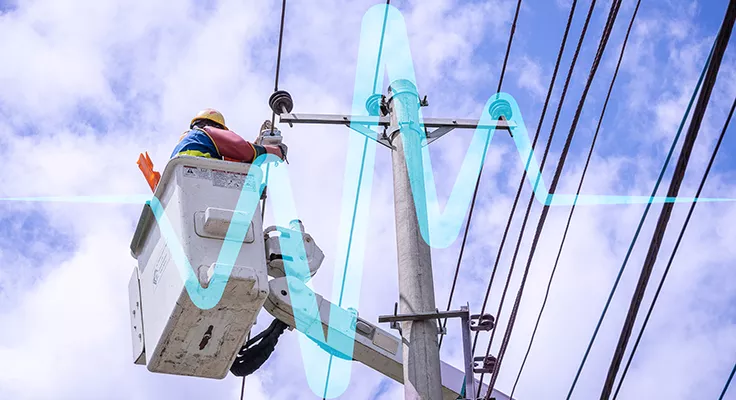
Grid analytics has changed how utilities monitor and maintain their electrical infrastructure. By deploying intelligent sensors across overhead lines and underground cables, utilities can now capture real-time power waveforms that reveal critical insights about asset health and network performance.
This technology moves beyond traditional reactive maintenance approaches, enabling utilities to predict equipment failures before they occur. Through continuous monitoring and advanced analytics, grid analytics platforms provide unprecedented visibility into network conditions, allowing operators to identify developing weaknesses and address them proactively.
The strategic value extends beyond immediate fault detection. Grid analytics creates a comprehensive data foundation that supports long-term asset management decisions, regulatory compliance, and network modernisation initiatives.
For utilities managing ageing infrastructure under increasing performance pressures, this technology offers a pathway to enhanced reliability and operational efficiency.
What Is Asset Health Indexing?
Asset health indexing transforms complex electrical measurements into actionable intelligence that asset managers can use to prioritise maintenance activities and capital investments. Traditional asset health assessments rely heavily on periodic inspections and historical failure data, which often miss developing issues between scheduled maintenance cycles.
Grid analytics changes this equation by providing continuous asset health monitoring. Smart sensors installed on overhead lines and underground cables capture detailed waveform data that reveals the electrical "signature" of each asset. Advanced algorithms analyse these signatures to identify patterns that indicate deteriorating insulation, developing earth faults, or mechanical stress on conductors.
This continuous monitoring approach enables utilities to build dynamic asset health indices that update in real-time as conditions change. Rather than relying on static condition assessments, operators can track asset health trends over time and identify assets that are experiencing accelerated degradation.
The system's ability to detect high-impedance faults proves particularly valuable for asset health indexing. These faults often develop gradually and can indicate serious insulation breakdown or conductor damage that traditional protection systems might miss. By identifying these conditions early, utilities can take corrective action before catastrophic failures occur.
How Can Grid Analytics Be Used for Predictive Maintenance and Forecasting?
Predictive maintenance represents the ultimate goal of modern asset management strategies. Grid analytics platforms enable this transition by providing the continuous data streams necessary to support sophisticated forecasting models.
The technology excels at identifying subtle changes in asset behaviour that precede failures. By analysing patterns in voltage, current, and power quality measurements, the system can detect developing issues weeks or months before they would become apparent through conventional monitoring methods.
This early warning capability proves especially valuable for critical infrastructure where unplanned outages carry significant financial and safety consequences. Utilities can schedule maintenance activities during planned outage windows, minimising service disruptions and reducing emergency repair costs.
Grid analytics also supports more sophisticated forecasting models by providing the historical data necessary to understand asset degradation patterns. Over time, utilities can develop asset-specific models that predict remaining useful life based on operating conditions, environmental factors, and historical performance data.
The forecasting capabilities extend beyond individual assets to support network-wide planning. By aggregating data across multiple assets, utilities can identify system-level trends that inform strategic investment decisions and long-term asset management strategies.
Implementation Strategies for Grid Analytics Programmes
Successful grid analytics deployment requires careful planning and phased implementation. Utilities should begin by identifying critical assets and network segments where monitoring will deliver the highest value. This might include assets with poor reliability history, equipment in harsh environmental conditions, or infrastructure serving critical customers.
The technical implementation involves deploying smart sensors at strategic locations across the network. These sensors must be designed for harsh outdoor environments and capable of operating reliably for extended periods without maintenance. Communication infrastructure connecting sensors to central monitoring systems requires careful consideration of data transmission requirements and network security protocols.
Data management represents another critical implementation consideration. Grid analytics systems generate substantial volumes of data that must be processed, stored, and analysed effectively. Utilities need robust data management platforms that can handle real-time processing whilst maintaining historical records for trend analysis and forecasting.
Integration with existing operational systems proves essential for maximising value from grid analytics investments. The monitoring platform should connect seamlessly with SCADA systems, distribution management systems, and asset management platforms to provide operators with unified visibility across their network.
Training and change management activities ensure that operational teams can effectively use grid analytics insights in their daily work. This includes developing new operational procedures that incorporate predictive maintenance recommendations and fault location information from the analytics platform.
Take Control of Your Asset Health with Grid Analytics
Grid analytics technology offers utilities a transformative approach to asset health management that delivers measurable improvements in reliability, safety, and operational efficiency. By providing continuous monitoring and predictive insights, these systems enable utilities to move from reactive to proactive maintenance strategies.
The technology's ability to detect developing faults before they cause outages represents a significant advance over traditional monitoring approaches. This early warning capability allows utilities to address issues during planned maintenance windows, reducing both service disruptions and emergency repair costs.
Ready to transform your asset health management strategy?
To discover how grid analytics can enhance your network reliability and operational efficiency
To find the solution that meets your specific requirements


