What Is Vibration Analysis Really Telling You?
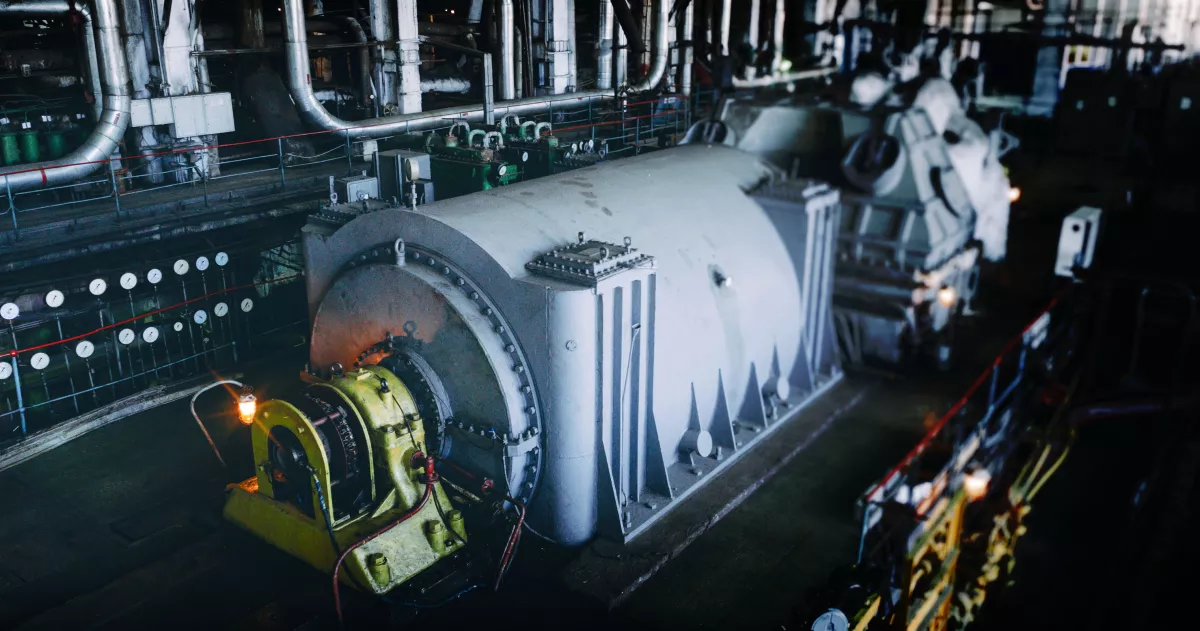
When your machinery starts showing signs of distress, vibration analysis becomes your first line of defence against catastrophic failure. This diagnostic technique transforms seemingly chaotic mechanical vibrations into clear, actionable intelligence about your equipment's health and performance.
Understanding what vibration analysis reveals requires moving beyond simple amplitude measurements to examine the intricate patterns hidden within mechanical signatures.
Every rotating component generates unique vibrational fingerprints that, when properly decoded, provide early warning signals of developing faults, performance degradation, and maintenance requirements.
The diagnostic power lies not just in detecting that something is wrong, but in precisely identifying what type of fault is developing, where it's located, and how rapidly it's progressing.
This level of insight enables you to transition from reactive maintenance to strategic, condition-based approaches that optimise both equipment reliability and operational costs.
What Is Vibration Analysis?
Vibration analysis operates on a fundamental principle: every mechanical fault generates a distinctive vibration pattern based on the machine's geometry and operating conditions. When you analyse vibration data, you're essentially reading the mechanical "fingerprint" of your equipment.
The process begins with measuring two key parameters that define vibration behaviour. Amplitude indicates the severity of vibration through displacement, velocity, or acceleration measurements.
Frequency reveals the number of vibration cycles from contributing sources, typically correlating to rotating or reciprocating motions.
Your vibration data appears in two distinct formats, each offering unique diagnostic value. Time domain analysis displays amplitude versus time, showing how vibration levels change during operation. Frequency domain analysis uses Fast Fourier Transform (FFT) to convert time-based signals into discrete frequency peaks, revealing specific fault frequencies that correspond to particular mechanical defects.
Advanced techniques expand your diagnostic capabilities significantly. Envelope analysis and demodulation techniques detect high-frequency bearing and gearbox faults by focusing on modulated frequency content.
What Can Vibration Analysis Detect in Your Equipment?
Vibration analysis excels at identifying specific mechanical faults through their unique frequency signatures. Each defect type produces characteristic patterns that experienced analysts can readily identify and quantify.
Bearing defects generate distinct frequencies related to bearing geometry and rotational speed.
Rolling element damage appears as impact frequencies that modulate at cage rotation and shaft rotational speeds. These bearing-specific signatures enable precise fault localisation and severity assessment.
Shaft misalignment creates axial and radial vibration components at rotational frequency and its harmonics. Angular misalignment typically produces higher axial vibration levels, whilst parallel misalignment generates predominantly radial components. The phase relationships between measurement points confirm alignment conditions and guide corrective procedures.
Unbalance manifests as high vibration at rotational frequency, with specific phase relationships across bearing locations.
Mechanical or component looseness creates a number of synchronous running speed harmonics on spectral data (i.e. 1x to 10x rpm) In certain instances and stages of deterioration, spectral data may also show sub-harmonic multiples of ½ rpm. Structural looseness is the result of loose machines feet, loose foundations, weak grouting, loose bolts or bedplates. These conditions typically produce a frequency of 1x and/or 2x rpm in the direction of the looseness.
Why Does Early Detection Matter for Your Operations?
Early fault detection through vibration analysis delivers quantifiable operational benefits that directly impact your bottom line. When you identify developing problems weeks or months before failure, you transform unplanned downtime into scheduled maintenance windows.
The economic advantages are substantial. Predictive maintenance using vibration analysis typically reduces maintenance costs by 25-30% compared to reactive approaches. You avoid emergency repairs, overtime labour charges, and expedited parts procurement. More importantly, you prevent secondary damage that occurs when primary faults progress unchecked.
Production continuity improves dramatically when you schedule repairs during planned outages rather than responding to unexpected failures. Each avoided emergency shutdown preserves production schedules, maintains customer commitments, and protects revenue streams. This operational stability becomes increasingly valuable in competitive markets where reliability differentiates suppliers.
Safety benefits extend beyond economic considerations. Many mechanical failures pose significant hazards to personnel and surrounding equipment. Catastrophic bearing failures can cause shaft fractures, whilst severe unbalance can lead to structural damage. Early detection prevents these dangerous scenarios by addressing problems whilst they remain manageable.
Equipment lifespan increases when you correct developing faults before they cause permanent damage. A slightly misaligned coupling caught early requires simple adjustment, whilst the same fault left unaddressed can destroy bearings, seals, and coupling elements. This proactive approach maximises asset utilisation and defers capital replacement costs.
How Can You Maximise Your Vibration Analysis Results?
Effective vibration analysis requires systematic data collection and interpretation protocols that ensure consistent, reliable results. Your measurement strategy should address sensor placement, data acquisition parameters, and trending methodologies that support accurate fault diagnosis.
Sensor placement directly affects data quality and diagnostic capability. Mount accelerometers on solid, machined surfaces close to bearing locations for optimal signal transmission.
Avoid painted surfaces, thin sheet metal, or locations with excessive structural resonance. Consistent measurement points enable meaningful trend analysis and facilitate condition comparisons over time.
Data acquisition parameters must match your diagnostic objectives. Sample rates should exceed two times the maximum frequency of interest. Frequency resolution must capture fault frequencies whilst maintaining reasonable data collection time. Averaging is crucial to reduce random noise and fluctuations, reveal underlying patterns, and get a stable, representative measurement of a machine's true vibration signature
Trending methodologies transform raw vibration data into actionable maintenance intelligence. Overall vibration levels provide quick screening for significant changes, whilst spectral trending tracks specific fault frequencies over time. Statistical process control techniques establish alarm thresholds based on equipment operating history rather than generic standards.
Environmental factors significantly influence vibration measurements and must be considered during interpretation. Temperature variations affect bearing clearances and lubrication properties, influencing vibration characteristics.
Load changes alter shaft dynamics and bearing loading patterns. Process conditions such as flow rates and pressures can affect machine vibration.
Where Should You Focus Your Vibration Analysis Efforts?
Strategic application of vibration analysis maximises diagnostic effectiveness whilst optimising resource allocation. Not every machine requires identical monitoring intensity and understanding where to focus your efforts ensures the greatest return on analytical investment.
Critical rotating equipment demands comprehensive vibration monitoring due to high failure consequences and repair costs. Large motors, pumps, compressors, and turbines typically justify continuous monitoring systems with automated trending and alarming. These systems provide immediate notification of developing problems and maintain historical databases for failure analysis.
Variable speed equipment presents unique challenges that require adapted analysis techniques. Standard spectral analysis becomes difficult when operating frequencies continuously change.
Order tracking and resampling techniques maintain frequency relationships whilst accommodating speed variations. These advanced methods ensure fault detection regardless of operating conditions.
Gear-driven equipment benefits significantly from vibration analysis due to the complex interaction between multiple components. Gearbox analysis requires understanding of gear mesh frequencies, modulation patterns, and load distribution effects. Sidebands around gear mesh frequencies often provide the earliest indication of tooth wear, misalignment, or lubrication problems.
Ready to Advance Your Vibration Analysis Expertise?
Vibration analysis reveals comprehensive information about your equipment's mechanical condition, but extracting maximum value requires understanding advanced techniques and interpretation methods.
To deepen your expertise and discover advanced vibration analysis techniques that detect subtle fault conditions, download our comprehensive white paper "Vibration Analysis: Beyond the Basics." This detailed resource explores sophisticated analytical methods and practical implementation strategies that transform your maintenance approach from reactive to predictive.


