Is Outdated Tech Spoiling Your Production Line?
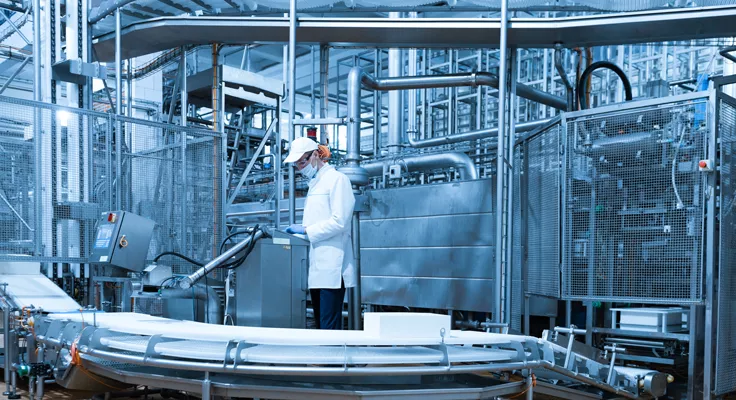
Picture a thriving bottling plant running at full capacity. The orders are flowing, the staff is busy, and the output is steady. Suddenly, the line halts. It’s not a major mechanical issue, but a single controller from the 1990s that finally failed. The engineer on shift has never seen this specific model before, and the manufacturer stopped making spares ten years ago.
This scenario is all too common in the UK food and beverage sector. Despite the industry generating £148 billion in annual output, a hidden vulnerability threatens this productivity.
While investment in new technology is high on the agenda, the reality on the factory floor is often different. Many manufacturers are trying to build a digital future on an analogue foundation, and the cracks are starting to show.
What Are the Risks of Legacy Automation?
While the sector expands, the infrastructure often lags behind. 69% of companies still depend on manual systems, spreadsheets, or legacy technology. This reliance creates a dangerous gap between ambition and reality.
The primary risk is a lack of support. Automation product lifecycles follow a predictable path, yet many producers miss the warnings. When equipment becomes obsolete, the expertise needed to fix it disappears. In the UK, the average age of an engineer is 55. This means firsthand knowledge of these legacy controls is retiring with them in a few years.
Security is also a growing concern. Outdated firmware and missing security patches mean legacy assets are exposed. In some cases, shopfloor systems are directly connected to corporate networks without proper segregation.
This creates hundreds of potential vulnerabilities for cyber attacks, risking not just production data but the integrity of the business itself.
How Much Is Doing Nothing Costing You?
Ignoring the problem is not a cost-saving strategy. The financial impact of maintaining obsolete equipment often far exceeds the investment required for modernisation.
When a discontinued Distributed Control System (DCS) fails, the support costs alone can run into the millions. Manufacturers are often forced into desperate measures, like scouring online marketplaces to source second-hand parts just to keep the lights on. This reactive approach leads to unplanned downtime, missed quotas, and significant safety risks.
There’s also an opportunity cost. You can’t optimise what you can’t measure. Old systems trap data in silos, making it impossible to gain the real-time insights needed to improve efficiency or reduce energy waste.
Modern machine health monitoring provides a comprehensive view of your assets, unlocking data that was previously inaccessible and forming the foundation of a successful predictive maintenance strategy.
How Can You Modernise Without Disruption?
The scale of the challenge can feel daunting, but you don’t need to replace everything overnight. The most effective approach begins with understanding your actual risk level through a structured site assessment. This process involves creating a complete asset register to document every automation component.
By identifying which components are approaching manufacturer end-of-support, you can map their criticality to your production safety and compliance. For mechanical assets, this is an ideal time to implement modern condition monitoring systems on critical rotating assets.
This allows for a phased upgrade roadmap where you can target the highest-risk areas first, spreading the cost and resource requirements over multiple years. With the right strategy, it’s possible to modernise without bringing production to a complete halt.
This phased approach can include integrating new solutions like wireless condition monitoring to gain visibility over previously unmonitored equipment.
Technologies such as a wireless vibration monitor or a comprehensive remote vibration sensor network can provide crucial data without extensive and disruptive cabling projects. This allows for targeted vibration analysis, which is a core component of effective asset management.
Where Does Megger Fit In?
Transitioning from reactive and time-based repairs to proactive strategies is essential for long-term resilience. Megger Industrial Reliability offers the expertise to bridge this gap. Our solution integrates consultancy with advanced analytical methods to create a unified reliability service for your industrial assets. We help you identify issues before they cause failures, moving you away from firefighting and towards control.
We provide tiered condition monitoring services, including scalable vibration monitoring services, to support your team. Whether you need a self-serve data collection package with tools for wireless vibration monitoring or full proactive consultancy and implementation support to fill a skills gap, we act as an extension of your team. Our expertise in vibration monitoring ensures that you can detect subtle changes in equipment performance that often precede major failures.
Are You Ready to Future-Proof Your Facility?
The food and beverage sector can’t afford to let obsolete systems dictate its future. Digital transformation and data-driven operations are preconditions for competitiveness in a volatile global market.
It starts with disciplined groundwork. By confronting obsolescence head-on, identifying critical assets and building a clear roadmap for predictive maintenance, you can reduce downtime, enhance safety, and unlock capacity. Those who act early will position themselves to lead in an increasingly digital economy.
If you’re ready to secure your infrastructure and improve reliability, contact our experts at Megger Industrial Reliability today.


