Where Renewable Substation Commissioning Projects Lose Time
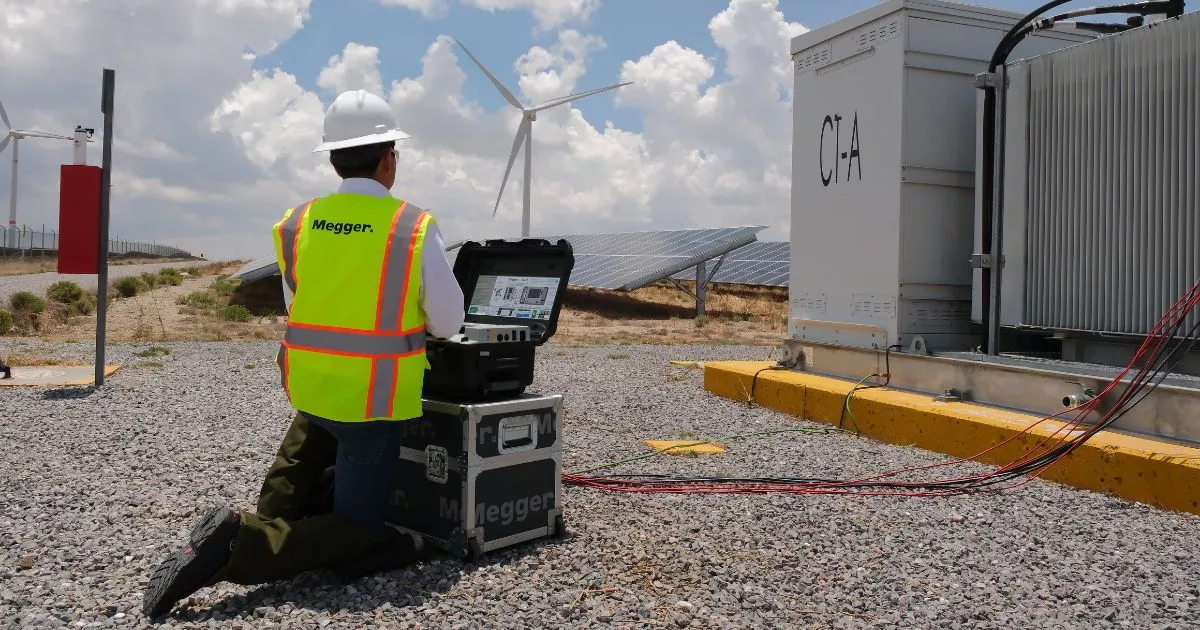
Renewable substation commissioning delays often begin before testing starts, when the test scope, equipment requirements or evidence expectations are not defined clearly enough. They then become more visible when completed work cannot move cleanly through review, approval and handover.
A required test may be missing from the plan. The wrong instrument may have been selected for the evidence needed. A protection test may be complete, but the settings version is unclear. A transformer test result may be acceptable, but the asset ID does not match the handover structure. A breaker test may have passed, but the report does not show enough detail for approval. A calibration record may exist, but it is not linked to the instrument used on the day.
None of these issues, on their own, may stop the job. Together, they create the rework loop that engineering, procurement and construction (EPC) project managers want to avoid: check the requirement, query the contractor, repeat the test, rebuild the report, resubmit the evidence and wait for review.
Project progress depends on more than completed tests. It depends on the right tests being specified, performed, validated, documented and handed over in a way that can be checked and trusted.
In wind, solar, hydro and battery energy storage system (BESS) substations, avoidable delays often sit in the gap between planning, testing, reporting, review and close-out. Reducing that delay means controlling the details earlier:
- which tests are required
- which instruments are suitable
- how results must be validated
- how evidence needs to be captured
- how test context is recorded
- how exceptions are flagged
- how instrument and calibration records are traced
- how evidence is prepared for handover
Bottleneck 1: The Right Tests Are Not Specified Early Enough
Commissioning delay can start before the first test is carried out.
If the required tests are not specified clearly, or if the equipment selected cannot produce the evidence needed for review, the project may only discover the problem after work has already been completed. At that point, the issue is not simply that a result is missing. It is that the original test may not be enough to support approval.
A test may have been performed correctly from the technician’s point of view, but still fail to answer the question the reviewer needs answered. The method may not match the requirement. The result may not include enough supporting evidence. The instrument may not capture the detail needed to validate the test. The report may show a value, but not enough proof of how that value was produced.
The project team may need to confirm whether the right test was performed, whether the right instrument was used, whether the result can be defended, and whether additional evidence is needed. In some cases, the test may need to be repeated because the original record does not satisfy the commissioning requirement.
Commissioning records increasingly need to prove that the data is real, properly captured and linked to the correct asset, method, instrument and point in time. In some markets, supporting evidence may also need to include timestamped photographs, structured reporting or records that can be reviewed more easily by approving bodies, insurers or asset owners.
Before testing begins, the project team should confirm:
- which tests are required
- which standards, specifications or project requirements apply
- which instruments are suitable for each test
- what evidence each result needs to include
- how each result will be validated
- whether photographic, timestamped or supporting evidence is required
- whether technicians need training or technical support before work starts
For an EPC project manager, the schedule risk is not only a failed test. It is discovering too late that the test performed does not prove what the project needs to prove.
Define the test scope, equipment needs and evidence requirements before commissioning starts. That gives technicians a clearer route through the work and gives reviewers a stronger basis for accepting the results without sending the project back into repeated checks.
Bottleneck 2: Test Records Do Not Match the Handover Structure
A test record only protects the schedule if it can be found, checked and linked to the right asset quickly.
Problems start when site records are organised around how the work was carried out, while the handover pack is organised around how the asset owner needs to review and operate the substation.
A commissioning team may label results by test date, instrument file name, work package or contractor. The asset owner may expect records by substation area, bay, asset type, equipment ID, protection scheme or project requirement.
The result is a close-out gap. The work has been completed, but the evidence still needs to be sorted, renamed, cross-checked and matched to the right part of the handover structure before it can be reviewed.
That creates avoidable handling at the worst point in the project. Engineers may be asked to confirm which asset was tested. Contractors may need to resend files in a different format. Project teams may have to rebuild folders, update trackers, check duplicate files and make sure the latest version has been included.
Each manual step adds risk:
- missing information
- duplicate files
- version confusion
- evidence linked to the wrong asset
- delays while reviewers wait for clarification
For an EPC project manager, the schedule risk is not only the test itself. It is the time lost turning completed site work into a record that supports approval, handover and close-out.
Set the evidence structure before testing starts. Each result should be linked to the correct asset, requirement and handover location from the beginning, so the project team is not rebuilding the commissioning record at the end.
Bottleneck 3: Results Need to Be Rechecked Because Context Is Missing
Reviewers are rarely asking for context because they doubt the engineer. They are asking because the record has to prove how the result was produced, configured and judged.
A transformer ratio result may appear acceptable, but the reviewer may still need to confirm the asset tested, tap position, test conditions, instrument used and expected limit. A protection relay test may show a pass, but the record may not make clear which settings file or scheme version was used. A breaker timing result may sit within tolerance, but the report may not show the configuration or procedure followed.
The result then moves from evidence to query.
Someone has to confirm the missing detail before the item can be closed. The test may have been performed correctly, but if the record does not show enough information to defend the result, the project team may have to investigate, explain, supplement or repeat the work.
For each test type, the commissioning record needs enough context for review:
- the asset tested and test method used
- the result, expected limit and acceptance criteria
- the relevant settings, configuration or test conditions
- the instrument used and calibration status
- the engineer, test date, issue status and handover location
This helps reviewers confirm whether the result supports the requirement without sending the project team back through old files, emails or instrument records.
A completed test should not become an open item because the result cannot be defended. Capturing the right context at the point of testing helps reduce avoidable queries, retesting and close-out delay.
Bottleneck 4: Borderline Results Are Not Flagged Early Enough
On new substations, a result that only just meets the acceptance criteria should not disappear into the list of closed items.
A transformer test may pass but sit close to the expected limit. A breaker timing result may be inside tolerance but different from comparable units. A protection test may pass the step being checked but still raise a question about the settings file, logic or wider scheme behaviour.
Those results need visibility while the testing sequence is still active.
If a borderline or unexpected result is only found during final report review, the project team has less room to act. The issue may need specialist review, comparison with factory data, a controlled repeat test, confirmation against the project acceptance criteria, or agreement with the asset owner before the item can be closed.
Late investigation can also affect the wider readiness package. Transformer tests, breaker tests, protection settings, SCADA visibility, communications and control functions all contribute to the same decision: whether the substation is ready to move forward.
An unresolved question in one area can slow acceptance of the wider package, even when most test items are complete.
The project team needs to see exceptions as testing progresses:
- clear passes that are ready for close-out
- borderline or unexpected results that need review
- failed results that need corrective action
- open items that could affect energisation or handover
That gives the team more time to involve the right people, check the right data and resolve the issue before final approval becomes the constraint.
Bottleneck 5: Multiple Contractors Create Multiple Evidence Formats
Wind, solar, hydro and BESS substations often involve several contractors, specialist teams and equipment suppliers. Each team may bring its own templates, file names, software exports, report formats and review processes.
The commissioning record can quickly become a collection of technically valid files that do not work together.
One contractor submits PDFs. Another submits spreadsheets. Instrument files sit separately. Emails contain clarifications that never make it into the formal record. Local folders hold the latest version, while the handover pack contains an earlier export.
The project team then loses time reconciling files, checking versions and confirming which records are ready for review.
The issue is not only document control. Different evidence formats make it harder to answer basic project questions:
- which tests are complete
- which results still need review
- which issues remain open
- which records are missing
- which work package is holding up handover
The delay comes from consolidation. Someone has to bring different file types, naming structures and report formats into a commissioning record that reviewers, asset owners and operators can use.
Contractor evidence does not need to look identical, but it does need to feed the same commissioning record. The project should define file naming rules, asset ID requirements, required report fields, issue log structure and handover folder locations before the work begins.
Without that shared structure, close-out becomes a consolidation exercise, and the project team spends time rebuilding the picture instead of closing the remaining items.
Bottleneck 6: Calibration and Instrument Traceability Sit Outside the Report
A result is harder to defend when instrument and calibration details sit outside the report.
The reading may be correct, but the reviewer still needs to know which instrument produced it, whether its calibration was valid on the test date, and whether the result links back to the correct asset and procedure.
That evidence needs to reflect the instrument status at the time of testing, not only its latest calibration status. If the instrument has since been recalibrated, updated or reassigned, the current record may no longer show the exact calibration position that applied when the commissioning test was carried out.
If calibration information sits elsewhere, review slows down. Someone has to find the instrument record, check the relevant certificate, confirm the valid date range for the test date, and connect it back to the specific result.
The calibration record may exist, but if it sits in a separate folder, database or local file, the reviewer still has to rely on someone joining the evidence together correctly. That creates risk, especially when the record needs to be reviewed months or years later.
Traceability becomes even more important when a result is questioned later. If a critical asset fails around energisation, the commissioning record may need to show not only what was tested, but how the result was produced, which instrument was used, and whether that instrument had valid calibration evidence at the time.
Keep historical calibration proof attached to the result. The reviewer should be able to see the result, the instrument used, the relevant calibration validity period and the test date in the same evidence trail, without chasing separate files during approval, close-out or later investigation.
Bottleneck 7: Manual Reporting Slows Review
Manual reporting often looks manageable while testing is underway. The workload becomes harder to control near close-out, when results, comments, attachments, issue logs and handover documents all need to align.
The reporting chain can become long very quickly.
Results are copied from instrument files into spreadsheets. Spreadsheet values are transferred into report templates. Report templates are combined into the handover pack. Summary tables are created manually. File names are changed to match the customer structure. Missing values are chased by email. Different teams update different versions of the same record.
The delay comes from repeated handling.
Every time data is copied, reformatted or moved into another document, the project team has to trust that nothing has changed, been missed or been linked to the wrong asset.
Manual reporting can introduce:
- transcription errors
- inconsistent units
- missing attachments
- duplicate records
- version-control issues
It also makes project status harder to confirm. A tracker may show that a test is complete, but the report may still be missing a corrected value, calibration detail, reviewer comment or supporting attachment.
Near energisation, the team needs reliable answers to practical questions:
- Which tests are complete?
- Which results still need review?
- Which assets still have missing evidence?
- Which reports are ready for submission?
- Which open items could affect energisation?
When those answers depend on manually maintained trackers, spreadsheets and scattered files, teams spend more time checking status and less time closing items.
Capture structured data as close to the test as possible. That reduces re-keying, keeps results connected to the correct asset and gives the project team a more accurate view of what is ready for review, submission and handover.
Bottleneck 8: Handover Starts Too Late
Handover should not begin when testing finishes.
If it is treated as a final documentation task, the project team often discovers gaps when there is very little time left to fix them. A report may be missing. An asset reference may not match the customer structure. A calibration record may not be linked to the test result. A reviewer comment may still be open. The latest file version may sit with a contractor rather than in the handover pack.
At that point, the problem is not only the missing information. The problem is the timing.
Late handover preparation pulls people back into work they thought was closed. Engineers may be asked to confirm test conditions from days or weeks earlier. Contractors may already be demobilising or moving to another project. Specialist reviewers may not be available quickly. Project teams may have to rebuild parts of the evidence pack while also managing final readiness, energisation planning and customer acceptance.
That creates a close-out bottleneck. Instead of using the handover pack to support acceptance, the team has to spend time proving whether the pack is complete enough to be reviewed.
By this stage, every earlier issue becomes harder to fix. Missing context takes longer to confirm. Contractor evidence is harder to collect. Calibration records have to be traced back through separate systems. Borderline results need attention when the testing sequence is no longer active.
Build the handover record throughout the commissioning process. Each completed test should move into the right structure while the work is still current, with the supporting evidence attached and any open item clearly visible.
That gives the project team a live view of:
- which records are ready for handover
- which reports still need review
- which evidence is missing or incomplete
- which open items could affect acceptance
- which contractor or specialist needs to respond
Handover then becomes a managed part of commissioning, not a late-stage search through reports, emails, instrument files and contractor folders.
How To Reduce Commissioning Rework Before Energisation
Rework is reduced when the evidence needed for review is agreed before testing starts.
For EPC project teams, this means defining the commissioning record early enough that each test produces evidence in the form needed for approval, handover and close-out. The project team should not have to rebuild the record after testing to prove what was done. It should also not discover too late that the wrong test, tool or evidence format was used.
The practical control point is simple: connect each test to the asset being tested, the requirement being checked, the instrument being used and the handover record it needs to support.
For each test type, the record should make clear:
- which asset or system the test belongs to
- which requirement, limit or acceptance criteria the result supports
- which procedure, settings file or configuration was used
- which instrument produced the result
- whether the instrument was suitable for the test
- whether calibration was valid at the time of test
- what supporting evidence is needed to validate the result
- whether the result is ready to close, needs review or requires corrective action
- where the record sits in the handover pack
This gives the project team a more useful view of progress. Instead of relying on a simple “complete” status, they can see which records are ready for review, which items still need action, and which gaps could affect energisation or handover.
It also gives reviewers a cleaner route through the evidence. The information needed to check the result is already connected to the record, rather than sitting across separate files, emails, certificates and contractor folders.
The aim is not more paperwork. The aim is fewer unresolved questions at the point where the schedule can least absorb them.
A Cleaner Route from Testing to Handover
Commissioning delays often sit in the gap between work completed and evidence accepted.
A test may be finished on site, but the project still loses time if the result cannot be found, checked, traced, reviewed and handed over without further work. That gap is where records are rebuilt, reports are returned, contractors are queried and completed tasks become open items again.
Reducing that risk means treating reporting, traceability and handover as part of the commissioning process from the start. Test evidence needs to be captured in a form that supports review while the work is still current, not reconstructed during close-out when people, files and decisions are harder to bring back together.
For EPC project teams, the benefit is practical. A stronger commissioning process helps reduce avoidable retesting, keeps specialist resources focused on the work that needs them, gives reviewers clearer evidence, and creates a handover pack that asset owners and operators can use with less backtracking.
The project does not only need completed tests. It needs a commissioning record that shows:
- what needed to be tested
- what was tested
- how each result was produced
- how results were judged
- which evidence supports the result
- which issues still need action
- whether the evidence is ready for approval and handover
When those answers are clear before final review, energisation and close-out can move forward with fewer late-stage questions.
That is where better commissioning quality protects the schedule: by turning completed site work into accepted evidence before the project reaches the point where delay is hardest to absorb.
Respond Faster When Commissioning Pressure Increases
Explore our Renewable Substation Commissioning Solutions for guidance and tools that support safer execution and stronger readiness before energisation.
FAQs: Renewable Substation Commissioning Delays
Commissioning delays can start before testing begins when the required tests, suitable instruments, acceptance criteria or evidence requirements are not defined clearly enough. If the completed result does not prove what reviewers, asset owners or approving bodies need to see, the project may need further clarification, supporting evidence or repeat testing.
Renewable substation commissioning delays often come from incomplete test records, unclear result context, manual reporting, late handover preparation and evidence that cannot be reviewed or approved without further work.
A completed test can still create rework if the record does not show what was tested, how the result was judged, which instrument was used, whether calibration was valid, or where the evidence belongs in the handover pack.
EPC teams can reduce rework by agreeing the commissioning record structure before testing starts, capturing test context at the point of work, flagging exceptions early and keeping evidence connected to the correct asset, requirement and handover location.
If handover starts only after testing finishes, missing reports, unclear asset references, open reviewer comments or unlinked calibration records may be found too late. Building the handover record throughout commissioning reduces close-out delays.
Commissioning evidence should show the asset tested, test method, result, acceptance criteria, relevant settings or configuration, instrument used, calibration status, issue status and handover location.


