What Is Partial Discharge Testing in GIS and Why Does It Matter for System Reliability?
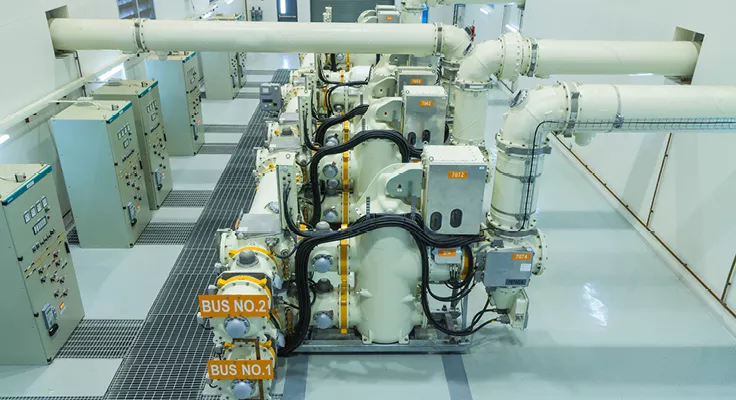
Partial discharge (PD) activity within gas insulated switchgear (GIS) is one of the most critical yet often overlooked threats to power system reliability.
While GIS technology has revolutionised substation design through its compact footprint and enhanced safety features, the sealed nature of these systems creates unique challenges for condition monitoring.
Understanding partial discharge henomena and implementing effective testing protocols can mean the difference between predictable maintenance schedules and catastrophic system failures.
Gas insulated switchgear operates under high electrical stress within sealed compartments filled with gases. This environment, whilst providing excellent insulation properties, can mask developing insulation defects until they reach critical stages.
Partial discharge testing serves as an early warning system, detecting microscopic electrical discharges that precede major insulation breakdown.
Why Does Partial Discharge Occur in Gas Insulated Switchgear?
Partial discharge activity in GIS typically originates from three primary mechanisms: manufacturing defects, installation issues, and service-related degradation. Manufacturing imperfections such as surface roughness, metallic particles, or gas voids create localised electric field concentrations.
These field enhancements can exceed the breakdown strength of gases, initiating discharge activity even under normal operating conditions.
Installation-related partial dischargesources include contamination introduced during assembly, improper torquing of connections, or damage to insulation surfaces during handling.
Service-related degradation encompasses conductor heating effects, mechanical vibration damage, and chemical reactions between SF6 decomposition products and metallic components.
The sealed nature of GIS compartments means that contamination or other defects can be difficult to detect and therefore go unnoticed Unlike air-insulated equipment where visual inspection can identify many problems, GIS requires sophisticated diagnostic techniques to assess internal condition.
How Do Current Detection Methods Address GIS Challenges?
Traditional partial discharge detection in GIS relies on electromagnetic coupling methods, utilising built-in sensors or external detection systems. Ultra-high frequency (UHF) detection has emerged as the preferred technique for GIS applications due to its sensitivity to the rapid electromagnetic pulses generated by partial discharge activity.
Modern digital partial discharge measurement systems provide multi-channel capability, allowing simultaneous monitoring of multiple GIS compartments. These systems offer wide bandwidth detection with high sensitivity, enabling detection of incipient defects before they compromise system integrity.
The key advantage of digital systems lies in their ability to provide phase-resolved partial discharge patterns, allowing engineers to distinguish between different defect types. This diagnostic capability transforms raw partial discharge data into actionable maintenance intelligence, supporting evidence-based decision making. The parallel measurement on multiple sensors allows a localisation of the defect for targeted countermeasures.
What Are the Consequences of Undetected Partial Discharge Activity?
Undetected partial discharge activity in GIS can progress through predictable degradation stages, ultimately resulting in complete insulation failure. The progression typically follows a pattern of increasing discharge magnitude, expanding affected area, and accelerating chemical degradation of surrounding materials.
SF6 decomposition products formed by partial discharge activity create additional problems. These chemically active compounds can attack metallic surfaces, creating new discharge locations and accelerating the degradation process.
The sealed environment prevents natural dispersion of these byproducts, concentrating their effects within the affected compartment.
System-level consequences include unplanned outages, equipment replacement costs, and potential safety hazards. GIS failures often require extended repair times due to the complexity of accessing internal components and the need for complete gas handling procedures.
How Can Modern Testing Protocols Improve Reliability?
Implementing comprehensive PD testing protocols requires both periodic assessments and continuous monitoring strategies. Factory acceptance testing establishes baseline performance characteristics, while commissioning tests verify proper installation and initial condition.
Periodic testing programmes should incorporate trending analysis to identify developing problems before they reach critical thresholds. Modern measurement systems support automated data logging and analysis, reducing the manual effort required for condition assessment programmes.
The integration of multiple measurement techniques, including electromagnetic, acoustic, and chemical detection methods provides comprehensive condition assessment capabilities. This multi-parameter approach increases diagnostic confidence and reduces the likelihood of missing developing defects.
Take Action to Protect Your GIS Assets
The transition from reactive to predictive maintenance requires investment in appropriate diagnostic equipment and staff training.
Modern partial discharge measurement systems provide the technical capability needed for effective GIS condition monitoring, supporting both routine assessments and continuous monitoring applications.
Ensure your GIS assets remain reliable and resilient. Contact our team today to find out how we can help protect your assets.


