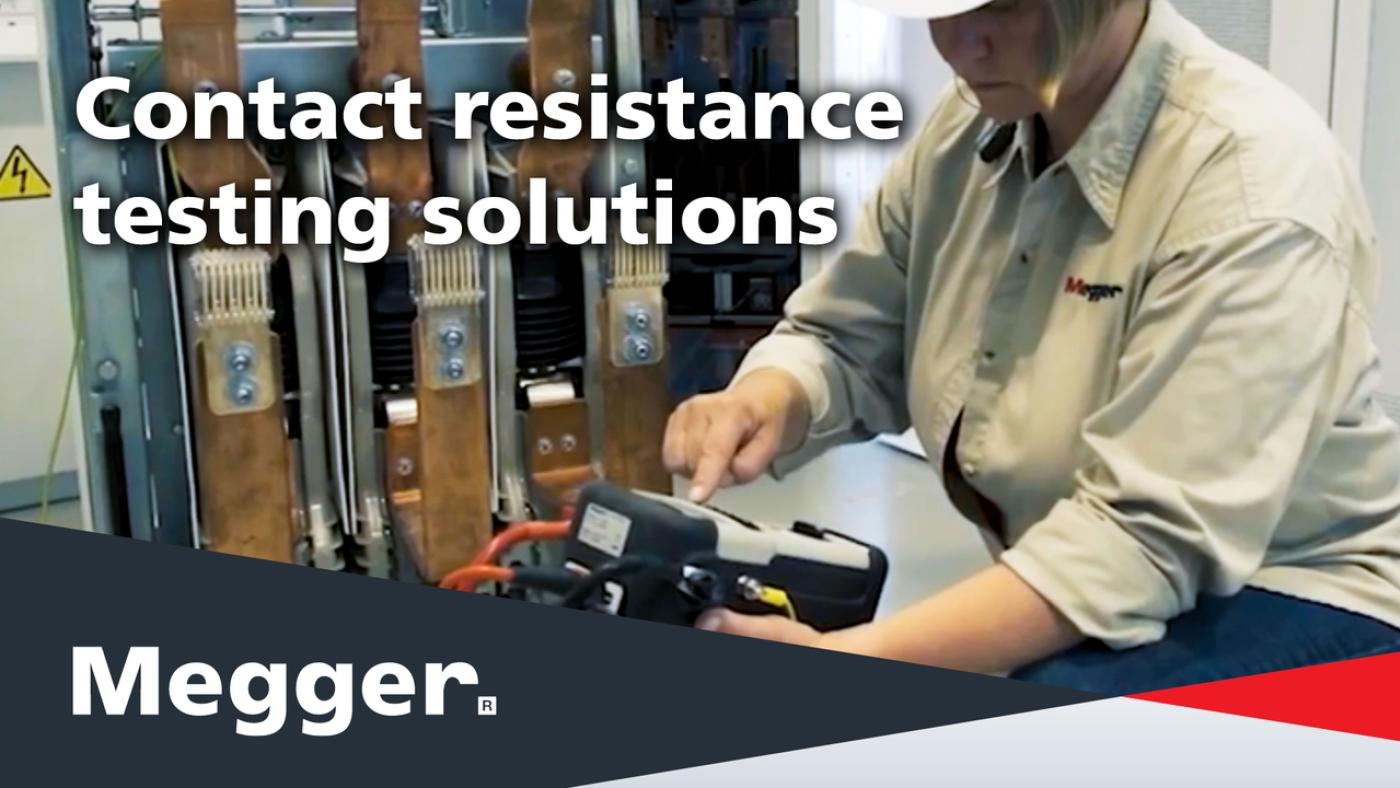
Contact resistance testing solutions

Get the fast, stable results you need in the field. Megger’s micro-ohmmeters deliver reliable, high-current contact resistance testing across circuit breakers, switchgear, and busbar systems.

When resistance rises, so does the risk. Even a slight increase can cause excessive heat, energy loss, equipment damage, or failure. That’s why it’s important to detect poor electrical connections early, so your systems continue operating safely and efficiently by staying within acceptable values and parameters.

Megger’s low resistance meters give you the confidence to act before problems escalate. Whether it’s degraded main contact surfaces, loose joints, corrosion, or aged materials, our instruments detect both steady-state and dynamic resistance with precision including applications such as a busbar contact resistance tests in switchgear and distribution systems.

Designed for use on circuit breakers, busbar connections, connectors, and other critical joints, our meters help you pinpoint weaknesses by testing that values are in acceptable limits, so you can carry out preventative maintenance and avoid costly downtime.

With Megger, you’re not just testing connections—you’re protecting your entire operation. 

Frequently asked questions

Low resistance testing is used across many industries to verify the integrity of critical connections. Common applications include: 

  • Utilities and contractors – testing breaker contacts, busbars, cable joints, and bonding points during commissioning and maintenance 
  • OEMs – production testing of breakers, high-voltage switchgear, and welded joints 
  • Transport and rail – checking ground connections, bonding, and conductor rail continuity 
  • Aerospace – verifying aircraft frame bonds and static control paths 

Anywhere a poor connection could cause heat, loss, or failure — low resistance testing is essential. 

Contact resistance test values are typically in the tens to hundreds of micro-ohms — too low for standard ohmmeters. You need a four-wire (Kelvin) tester to eliminate lead resistance and deliver accurate results. 

Standards require high test currents: 

  • IEC recommends 50 A or more 
  • IEEE recommends 100 A or more 

Choose an instrument with a smooth DC output, current ramp-up/down control, and, ideally, DualGround™ capability for added safety when testing both sides of the breaker remain earthed. 

There’s no single “correct” value — it depends on the breaker type, size, and manufacturer specs. 
However, consistency is key: 

  • Look for stable, repeatable results 
  • Watch for sudden increases over time — they could indicate contact wear, corrosion, or looseness 
  • Compare phases and poles — large deviations often signal a problem 

Always refer to the manufacturer’s guidelines and baseline test data where available, including the specified acceptable values for the contact resistance test or equivalent criteria.

Higher current improves measurement accuracy and helps confirm acceptable test values by:

  • Overcoming surface oxidation or film resistance 
  • Stabilising the reading in inductive circuits 
  • Matching real operating conditions for breakers and busbars 

High current also helps meet compliance standards and improves confidence in the test result — especially in critical power infrastructure.

Need Reliable Contact Resistance Testing?

Get expert advice on the right solution for your application — whether it’s routine maintenance, commissioning, or production testing. Our team is here to help you choose the best tool for the job. 

Additional resources

A Guide to Low Resistance Testing

Learn how to select the right instrument and how to interpret the results. 

Read more

Circuit Breaker Testing Guide

Understand what it takes to keep circuit breakers at peak performance

Read more

With you all the way for low-resistance testing!

Low-resistance testing can save you time, money and trouble 

Read more