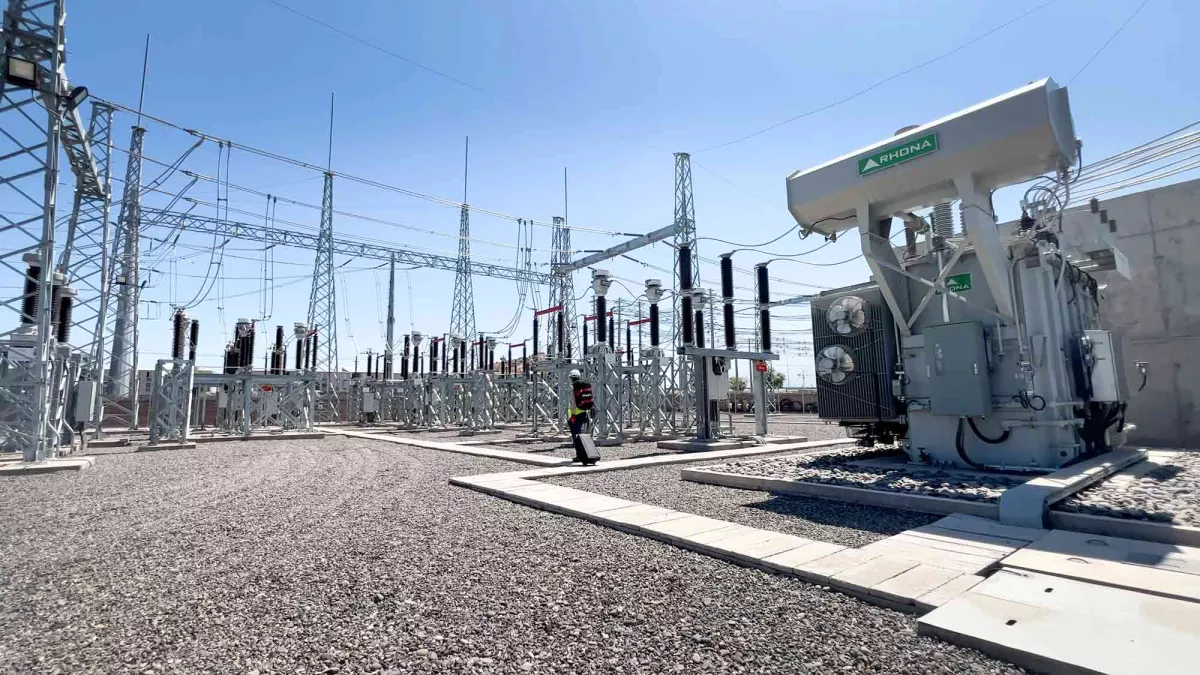
Transformer frequency response analysis

Understand the true mechanical condition of your transformer by analysing how its windings and core respond to a swept-frequency signal — revealing movement, deformation, shorted turns and structural issues early.

A transformer’s internal structure — its windings, core, and clamping system — has a natural electrical “fingerprint.” When something changes mechanically, the frequency response changes with it. That makes frequency-response testing one of the most sensitive ways to detect winding deformation, core movement, loose clamping, or shorted turns.

Megger’s frequency-response tools help you compare today’s signature with a reference curve from commissioning, a sister unit, or even phase-to-phase. Any differences highlight physical changes that other tests might miss.

Whether you’re checking a transformer after transport, investigating a fault, or doing routine maintenance, frequency-response analysis gives you the confidence to act early and avoid unexpected failures.

Megger_substation

Frequently asked questions

Sweep Frequency Response Analysis (SFRA) checks the mechanical integrity of transformer windings, the core, clamping structures, and internal connections. A low-voltage signal is injected into a winding and the response is measured across a wide frequency range (typically 20 Hz to 2 MHz). 

By comparing the result with a reference trace, you can detect: 

  • core movement 
  • faulty or floating core grounds 
  • winding displacement 
  • hoop buckling 
  • partial winding collapse 
  • shorted turns 
  • open circuits 
  • loose clamping or structural changes 

SFRA is one of the most sensitive diagnostic methods available for mechanical integrity. 

Yes. Although same-transformer baseline comparison is ideal, you can still interpret results using: 

  • phase-to-phase comparisons, 
  • sister/identical unit comparisons, 
  • factory reference curves, or 
  • establishing a “healthy” baseline today for future checks. 

Even without historical data, SFRA still gives valuable insight into symmetry, construction differences, and potential mechanical issues. 

Yes. The key standards include: 

  • IEEE C57.149-2024 – Application and Interpretation of SFRA 
  • IEC 60076-18 
  • DL/T 911-2004 
  • CIGRÉ TB 342 and 812 

These documents provide guidance on methodology, comparison techniques, and interpreting mechanical-integrity changes. 

Before running SFRA, the transformer’s core should be demagnetised to ensure repeatable, stable results — especially at low frequencies. Residual magnetism affects the low-frequency response and can mask or exaggerate mechanical issues. Megger instruments and test vans include automated demagnetisation to ensure the transformer is in a suitable condition before testing.

Find out more about transformer frequency response test systems

Megger’s SFRA and FRSL solutions give you a clear, reliable view of transformer mechanical condition — helping you detect problems early, plan maintenance with confidence, and protect your high-value assets.

Additional Resources

Take a deeper dive into transformer testing instruments through our comprehensive guides.

Sweep frequency response analysis

Sweep Frequency Response Analysis (SFRA) is a powerful and sensitive method for evaluating the mechanical integrity of core, windings and clamping structures within power transformers. 

Read More

Frequently confused by frequency testing?

Testing transformers at non-traditional frequencies – that is frequencies other than DC, 50 Hz or 60 Hz – can provide invaluable diagnostic information. 

Read More

Frequency response of stray losses in transformers

Frequency response of stray losses (FRSL) testing for transformers - an invaluable test technique that is rapidly gaining recognition in the industry.

Read More