New
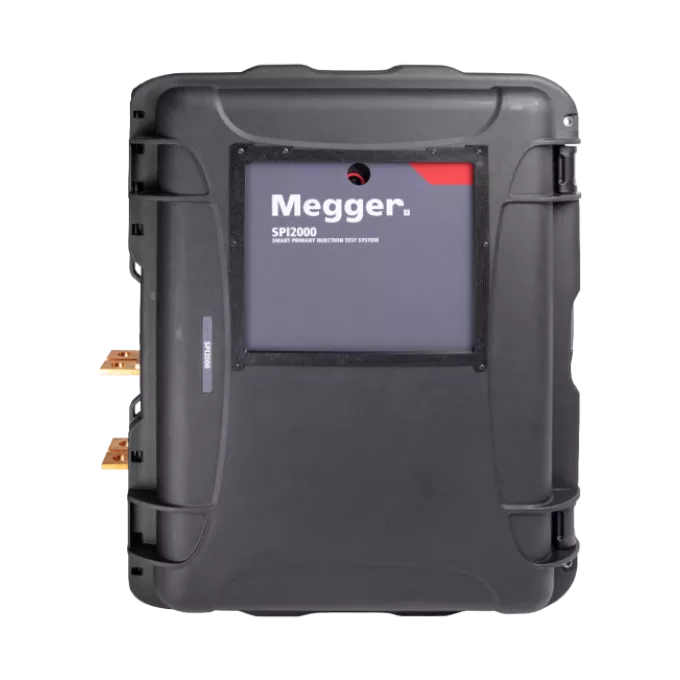
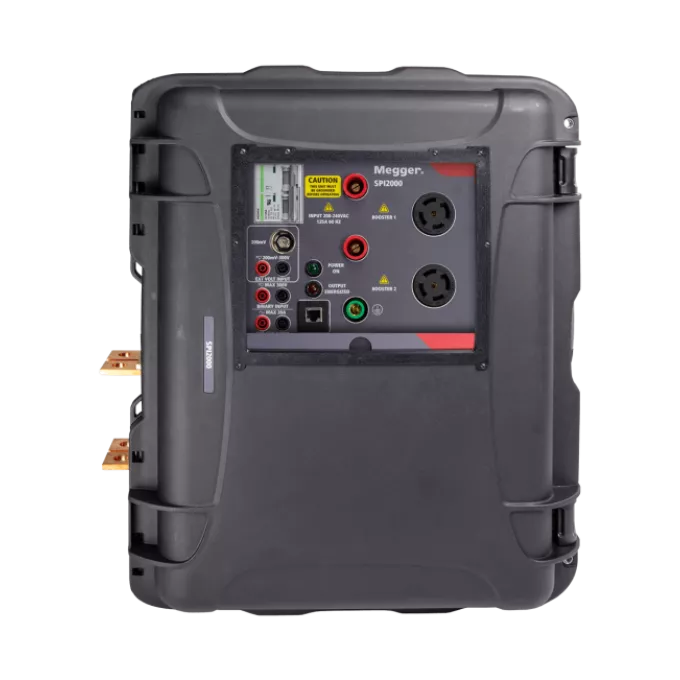
SPI2000 Smart primary injection test system
Add boosters to test up to a 2000 A breaker
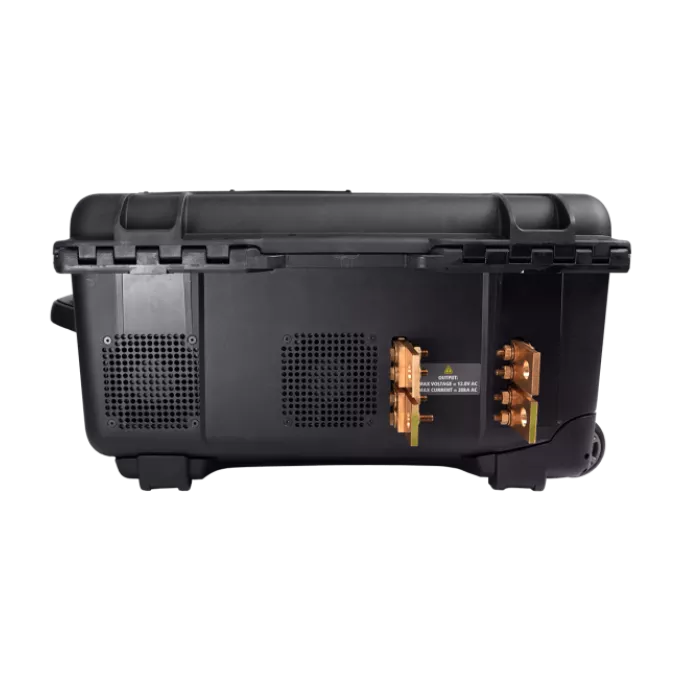
Stackable unit that can easily be loaded into a van or truck to move from site to site. The main unit can test up to a 600 A breaker, and by adding boosters up to a 2000 A breaker
IGBT controlled output to keep constant current. Ability to request a current and the unit will apply the current similar to a relay test set, without having to perform any adjustments.
Versatile test set that can push current for most applications. Portable enough to use for smaller jobs where less current is needed or connect boosters for additional voltage and power.
Hundreds of breaker curves have been preloaded into the software. These include from ABB, Siemens, Eaton, Schneider and many more. We are continuously updating and adding new curves to the library
About the product
Portable Primary Injection Test set, with stackable boosters to get increased output.
The Model SPI2000 is a high current primary injection test system with the flexibility to test a wide variety of devices such as low-voltage power circuit breakers, molded-case circuit breakers equipped with thermal magnetic or electronic trip devices, overcurrent relays, and thermal relays via primary injection.
The SPI2000 is designed to test a wide range of circuit breakers, with ratings up to 2000 A frame size. The unit is fully compliant with NEMA AB-4 test guidelines.

Related products


Interpreting test results
Proper primary injection testing of low voltage circuit breakers (LVCB) will confirm that they trip at the correct times and can properly isolate a fault. A coordination study is performed, and parameters are set to minimise the amount of interruption to other equipment. The characteristics of the circuit breakers are presented in the form of trip curves, and each circuit breaker will have a unique trip curve published by the manufacturer. The trip curves will have bands, or limits, that show how long it takes for the circuit breaker to trip when a certain amount of current is applied; the current is typically presented in multiples of the rated current. As long as the circuit breaker trips within the specified band, it operates correctly. You may perform up to four primary injection test types to verify that the LVCB is working correctly: a long-time test, short time test, instantaneous test, and earth/ground fault test. The long, short, and ground fault tests all have a delay component. In contrast, the instantaneous test trips the circuit breaker immediately.
The long-time test is a test of the overload function and requires two settings. The first setting is the pickup, which determines the load current level that is tolerable before an overload condition occurs. The second setting is the time delay that determines how long the overload condition is acceptable. Systems are generally designed to handle overload conditions for a short time. Still, damage will occur if the overload persists for too long. You typically perform a long-time test at 3 times the rated current.
The short time test is also an overload test with a pickup time like the long-time test but has a shorter duration with a higher current. Typical currents are at 6 times the rated current. A short time setting on the breaker is used to allow high current loads for a short duration, for example, a motor starting.
The instantaneous trip conditions test the breaker under faulty conditions. Therefore, there is no intentional time delay built in, and the breaker should trip within milliseconds. If the circuit breaker fails to trip and clear the fault, this may result in damage to equipment or personnel. Additionally, an upstream breaker may need to clear the fault, resulting in other electrical system components unrelated to the fault being shut down. An instantaneous trip is typically tested using 8 to 12 times the rated current.
An earth/ground fault trip in the circuit breaker occurs when higher-than-normal currents flow through the ground path. Like the long time and short time functions, the ground fault has both a pickup current and a delay time. Both can be adjusted to fit the coordination study. There is typically a maximum delay that is permitted from ground fault conditions.
Each test is performed separately for each phase. As long as the trip time falls between bands on the time-current curves, the circuit breaker is considered to be in working condition.
Note: the ground fault sensor must be disabled to test long, short, and instantaneous trips.


