Comparison Guide - Static vs Dynamic Testing: Which Delivers Higher ROI in Industrial Plants
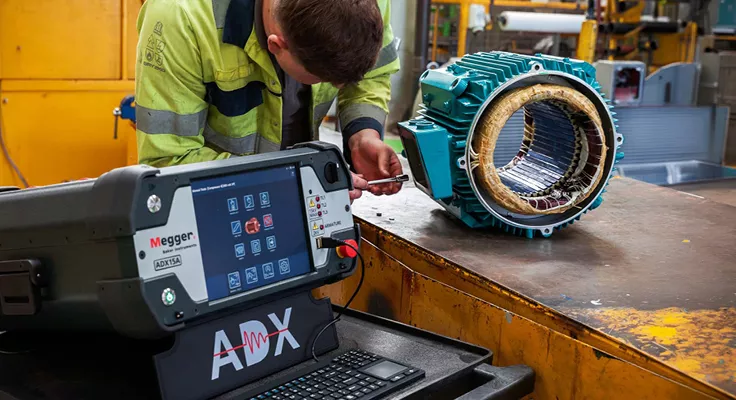
In industrial settings, maintaining the health of electric motors is a critical component of safety, reliability, and profitability.
Two primary methodologies guide motor maintenance strategies: static (offline) testing and dynamic (online) testing.
While both are essential for a comprehensive maintenance programme, understanding their distinct applications, capabilities, and return on investment (ROI) is crucial for making informed decisions.
What Is the Difference Between Static and Dynamic Motor Testing?
Static and dynamic motor testing are two distinct but complementary approaches to assessing the health of electric motors. The fundamental difference lies in the operational state of the motor during the test.
Static testing, also known as offline testing, is performed while the motor is de-energised and disconnected from its power supply. This methodology focuses on the integrity of the motor's insulation and winding circuits. It is a foundational component of quality assurance during manufacturing, commissioning, and post-repair verification. Static tests are also vital for establishing a baseline condition for a motor, which can be trended over time to detect gradual degradation.
Dynamic testing, or online testing, is conducted while the motor is energised and operating under normal load conditions. This method provides real-time insights into the entire motor system, including the power supply, the motor itself, and the driven load. By analysing voltage and current signals, dynamic testing can identify performance issues and developing faults that only manifest under operational stress.
What Faults Can Static Testing Detect?
Static testing provides a comprehensive evaluation of a motor's internal insulation and circuit condition. Because the tests are performed offline, they can safely apply higher voltages to stress the insulation system and reveal weaknesses that might not be apparent during normal operation.
Key Static Tests and Their Applications
- Winding Resistance: Measures the DC resistance of the motor windings. This test helps identify issues such as high-resistance connections, open circuits, or incorrect wire sizes. Consistent, balanced resistance across all three phases is essential for stable motor performance.
- Insulation Resistance (IR), Dielectric Absorption (DA), and Polarisation Index (PI): These tests assess the condition of the groundwall insulation. They are effective at detecting moisture ingress, contamination, and thermal degradation of the insulation material. Trending PI values over time is a reliable method for monitoring insulation health.
- DC High Potential (HiPot) and Step-Voltage Tests: These tests apply a controlled DC overvoltage to the windings to assess the strength of the groundwall insulation. They are designed to expose pinholes, cracks, and other weak points that could lead to a catastrophic failure under electrical stress.
- Surge Testing: This is the only test that can reliably detect weaknesses in the turn-to-turn, coil-to-coil, and phase-to-phase insulation systems. By applying a series of high-voltage, fast-rising pulses to the windings, surge testing can identify insulation breakdown that other tests miss. When combined with Partial Discharge (PD) measurement during the surge test, it provides even greater insight into the location and severity of insulation defects.
What Faults Can Dynamic Testing Detect?
Dynamic testing offers a holistic view of the motor system in its real-world operating environment. It is particularly effective for diagnosing issues related to power quality, load conditions, and mechanical performance that static tests cannot identify.
Key Dynamic Test Parameters and Their Applications
- Power Quality Analysis: Dynamic analysers monitor incoming power for issues such as voltage and current imbalances, harmonic distortion, and poor power factor. These conditions can cause motor overheating, reduce efficiency, and shorten the operational life of the equipment. According to the U.S. Department of Energy, a voltage imbalance of just 1% can result in a current imbalance of 6 to 10%, leading to significant temperature increases in the windings.
- Motor Performance Assessment: By evaluating parameters like torque, speed, and efficiency, dynamic testing provides a clear picture of how the motor is performing under its specific load. This can help identify if a motor is oversized or undersized for its application, leading to opportunities for energy savings and improved reliability.
- Load Diagnostics: Analysing torque ripple and current signature can reveal issues with the driven load, such as mechanical misalignment, bearing defects, or process-related fluctuations. These mechanical stressors can be reflected back into the motor, causing electrical and mechanical fatigue.
- Rotor Fault Detection: Dynamic testing is highly effective at identifying faults within the motor's rotor, such as broken rotor bars. These faults create a distinctive signature in the motor's current spectrum, allowing for early detection before they lead to significant performance degradation or catastrophic failure.
How Do Static and Dynamic Testing Compare for ROI?
When evaluating the ROI of motor testing strategies, it is important to consider both the direct costs of testing and the indirect costs of unplanned downtime. A comprehensive maintenance programme that intelligently combines static and dynamic testing will deliver the highest long-term value.
Static testing provides its greatest ROI by preventing catastrophic insulation failures and ensuring the quality of new or repaired motors before they are put into service. A single turn-to-turn short can lead to rapid, progressive winding damage, resulting in a complete motor failure. The cost of a surge test is minimal compared to the cost of rewinding a large industrial motor and the associated production losses. Furthermore, performing a suite of static tests during a planned outage is far more cost-effective than reacting to an unexpected breakdown.
Dynamic testing delivers ROI by optimising system performance and identifying operational stressors that lead to premature failures. By monitoring power quality and load conditions, dynamic testing helps maintenance teams address root-cause issues, not just symptoms. For example, correcting a significant voltage imbalance can prevent motor overheating, reduce energy consumption, and extend the motor's lifespan. Dynamic testing also supports a predictive maintenance strategy by providing the real-time data needed to forecast developing faults and schedule maintenance proactively.
The most effective approach is to integrate both methodologies. Static testing establishes the baseline health of the motor's core components, while dynamic testing monitors the health of the entire system in its operational context. Together, they provide a complete picture of motor health, enabling a truly predictive and proactive maintenance strategy that maximises uptime and extends asset life.
A Comprehensive Approach to Motor Reliability
Choosing between static and dynamic testing is not an either/or decision. A truly robust motor maintenance strategy leverages the strengths of both. Static testing verifies the fundamental integrity of the motor's insulation system, preventing premature failures, while dynamic testing provides continuous insight into the entire operational system, optimising performance and identifying stressors before they cause damage.
By combining these powerful diagnostic tools, you can move from a reactive or time-based maintenance model to a predictive, condition-based strategy. This approach not only reduces the risk of unplanned downtime but also maximises the return on your maintenance investment.
Megger offers a complete portfolio of both static and dynamic motor analysers, designed to meet the demands of modern industrial environments. Our instruments provide the accurate, repeatable data you need to make confident decisions about your critical assets.
Ready to build a more resilient and efficient motor maintenance programme? Contact us today to get a quote for a testing solution tailored to your facility's needs.


