Why Low-Resistance Faults Are Some of the Hardest Low-Voltage Faults to Locate
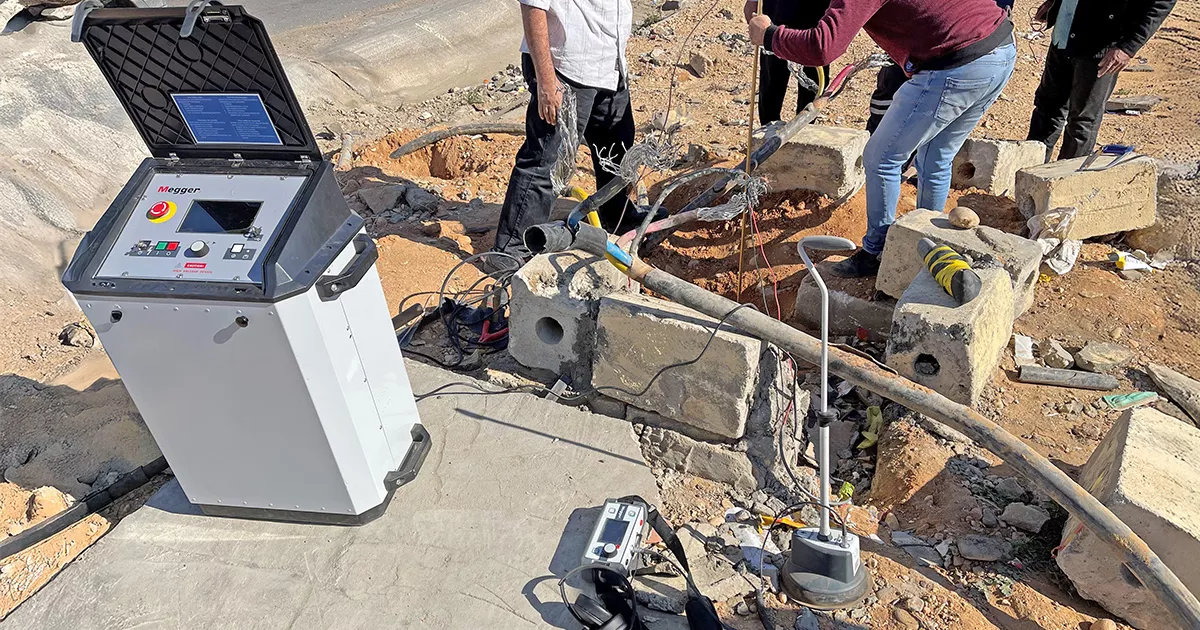
Low-resistance fault location can become difficult very quickly when the fault refuses to behave in a straightforward way.
On paper, the task sounds simple enough: a cable fails, you investigate it, the fault is found, and the repair can begin.
In the field, however, the reality is often far messier, especially when the fault gives you very little to work with. If the sound is weak and the fault does not reveal itself clearly, walking the route and listening can stop feeling like a dependable method and start feeling more like guesswork.
This is exactly why low-resistance faults can be some of the hardest faults to locate.
When the fault does not give you enough to work with
A lot of fault-location work still begins in a familiar way: you get close to the area and listen for the fault. When the fault is clear enough, that can work well.
The problem is that some low-resistance faults do not give you that level of feedback. Instead of narrowing the search down quickly, you can end up walking the route, listening again, rechecking the area, and still not feeling sure that you are close enough to pinpoint the fault.
That is when the process starts to become frustrating. The challenge is not just that the fault exists, but that the usual approach is no longer giving you enough clarity to judge the next step with confidence.
When uncertainty starts to slow the job down
When you are left with too little clarity, the job starts to slow down.
Instead of moving steadily from locating to pinpointing, you can end up stuck in a loop of trying, checking, and second-guessing. On longer routes, that can mean more walking, more time spent listening for a fault that is still not giving much away, and more pressure to decide whether you should keep pushing or change approach.
The longer that uncertainty continues, the harder it becomes to feel in control of the process. That matters because difficult faults are not just time-consuming. They can also become harder to handle if the process is pushed too far.
With low-resistance faults, conditioning the fault may help make it easier to locate, but overdoing that process can make the job much harder to finish cleanly.
Why a more controlled approach matters
When the fault is difficult, what you need is not simply more effort, but more control over the process.
A better approach helps you understand the fault earlier, narrow the likely location sooner, and move forward with more confidence in the next step. In practice, that means following a clearer sequence from fault identification to prelocation and then pinpointing, rather than relying on thumping alone and hoping the fault reveals itself clearly. It reduces the need for trial and error and gives you a clearer sense of what kind of fault you are dealing with, so you can respond in a way that moves the job forward rather than making it harder to finish cleanly.
That kind of support matters even more when fault location is not the only thing you do. In many cases, fault locating is just one part of a wider role, which means you may not always have the time or specialist depth to work through a difficult fault by instinct alone. In that situation, a guided process and clearer feedback become just as valuable as raw capability, especially when the system is designed to suggest the next logical step rather than leave you to interpret everything manually.
How the M-Thump5 helps
The M-Thump5 is designed to help you work through difficult low-resistance fault-location jobs with less guesswork and more control.
When a weak audible response leaves too much uncertainty, having up to 1000 J at 5 kV can give you a much stronger basis for pinpointing, rather than leaving you to work from a vague sound and an even vaguer search area.
It also supports a more controlled approach when the fault will not reveal itself properly. If the fault needs conditioning before it can be pinpointed, the process needs to be handled carefully rather than pushed blindly. The M-Thump5 supports that by helping you work toward a usable fault condition without losing control of the job.
Just as importantly, it helps you follow a clearer process from fault identification to prelocation and pinpointing. Rather than relying on thumping alone, E-TRAY suggests the next logical step and makes the overall workflow easier to follow in the field.
A better way through difficult low-voltage faults
Difficult low-resistance faults do not just slow the job down. They make it harder to judge the next step, harder to stay in control of the process, and harder to pinpoint the fault cleanly.
That is why a more controlled approach matters. The M-Thump5 is designed to help you work through those difficult moments with less guesswork, more confidence, and a clearer route to the fault.
Download the guide to low-resistance fault location
Download the guide to see how a more controlled approach can help you reduce guesswork and handle difficult low-resistance faults with more confidence.


